• Published on: Dec 17, 2025
  • 5 minute read
  • By: Secondmedic Expert

Virtual Cooking Class With A Dietitian: Why It’s A Powerful Corporate Wellness Benefit

  • WhatsApp share link icon
  • copy & share link icon
  • twitter share link icon
  • facebook share link icon

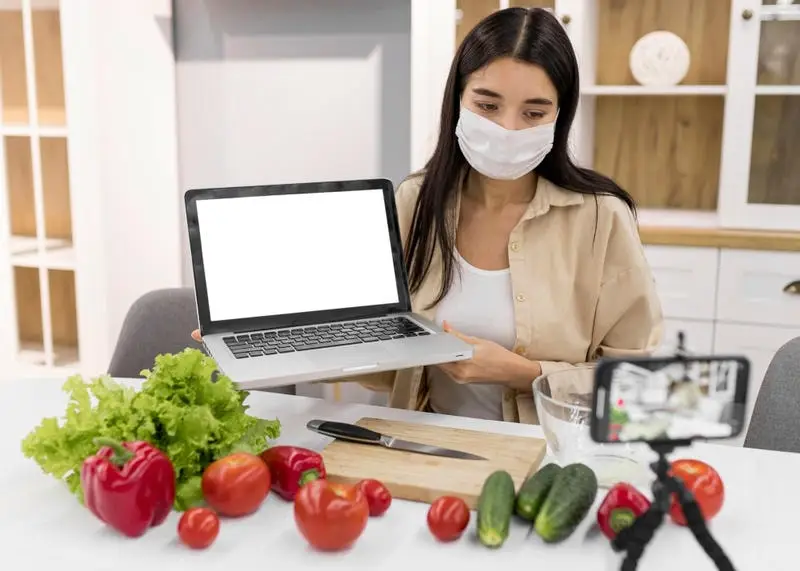
Corporate wellness programs in India are undergoing a meaningful transformation. What once revolved primarily around annual health checkups and gym memberships is now shifting toward sustainable lifestyle-based interventions. Among these, the virtual cooking class with a dietitian has emerged as one of the most practical and high-impact wellness initiatives for modern workplaces.

Poor dietary habits are a leading contributor to lifestyle-related conditions such as diabetes, obesity, hypertension, and heart disease. According to the Indian Council of Medical Research (ICMR) and the National Family Health Survey (NFHS-5), a significant proportion of India’s working population consumes excess refined carbohydrates, sugar, and unhealthy fats, while falling short on protein, fibre, and essential micronutrients.

For corporate wellness initiatives to create lasting impact, they must move beyond awareness and actively support behaviour change. Dietitian-led virtual cooking classes address this gap by turning nutritional knowledge into daily practice.

Why Nutrition Is a Critical Corporate Wellness Priority

1. Rising lifestyle disease burden among employees

ICMR data highlights the growing health challenge within India’s workforce:

  • Over 100 million Indians live with diabetes

  • Nearly one in four adults has hypertension

  • Obesity rates are rising even among younger professionals
     

These conditions directly affect productivity, absenteeism, insurance claims, and long-term healthcare costs.

2. Desk-bound and remote work culture

Sedentary routines, irregular meal timings, and reliance on processed or convenience foods have become common in corporate environments, especially with hybrid and remote work models.

3. Knowledge does not translate into action

Many employees are aware of what constitutes healthy eating but struggle to apply this knowledge in everyday cooking. Virtual cooking classes bridge this gap by offering hands-on, real-world guidance.

What Is a Virtual Cooking Class with a Dietitian?

A virtual cooking class with a dietitian is an interactive online session led by a qualified nutrition professional who:

  • Demonstrates healthy, practical recipes

  • Explains ingredient choices and substitutions

  • Teaches portion control and meal balance

  • Addresses common dietary myths

  • Answers real-time participant questions
     

Unlike generic cooking shows or wellness webinars, these sessions are evidence-based and aligned with preventive health goals. They are designed specifically for corporate audiences, ensuring simplicity, cultural relevance, and scalability.

Why Virtual Cooking Classes Work Better Than Traditional Nutrition Talks

1. Practical skill-building

Employees learn how to:

  • Plan balanced meals

  • Cook quick, healthy dishes

  • Reduce excess sugar, salt, and oil

  • Read food labels with confidence
     

Skill-based learning leads to stronger habit formation than passive education.

2. Higher engagement and participation

Interactive cooking sessions are:

  • More engaging than lecture-style talks

  • Suitable for virtual and hybrid teams

  • Inclusive across age groups and roles
     

Participants actively cook, ask questions, and engage rather than passively listening.

3. Cultural relevance

Dietitians tailor recipes to Indian food habits, regional preferences, and household realities, making healthy eating feel practical and sustainable rather than restrictive.

Key Benefits for Employees

Improved daily nutrition

Employees gain confidence in preparing balanced, nourishing meals at home.

Better energy and focus

Stable blood sugar levels and improved nutrient intake support sustained energy and mental clarity during work hours.

Reduced lifestyle disease risk

WHO and Lancet research confirms that dietary improvements significantly reduce the risk of chronic diseases.

Stress reduction

Cooking itself can be therapeutic, contributing positively to mental wellbeing.

Family-wide impact

Healthy habits learned by employees often influence household food choices, extending benefits beyond the workplace.

Why Employers Benefit from Virtual Cooking Classes

1. Reduced absenteeism

Healthier employees tend to experience fewer illness-related absences.

2. Improved productivity

Better nutrition supports cognitive performance, stamina, and focus.

3. Lower long-term healthcare costs

Preventive nutrition initiatives reduce the burden of chronic disease-related claims.

4. Stronger wellness culture

Interactive and practical programs demonstrate genuine employer commitment to employee wellbeing.

5. High return on investment

Compared to large-scale medical interventions, virtual cooking classes are cost-effective, scalable, and easy to implement.

EY–FICCI corporate wellness reports consistently show that nutrition-focused preventive programs deliver higher engagement and long-term impact.

Topics Commonly Covered in Corporate Cooking Classes

  • Balanced Indian meals
    Focus on protein, fibre, and micronutrient adequacy

  • Quick workday recipes
    Healthy meals prepared in under 30 minutes

  • Disease-preventive diets
    Heart-healthy, diabetes-friendly, and weight-conscious cooking

  • Smart ingredient swaps
    Replacing refined grains, excess oil, and added sugar

  • Portion control techniques
    Understanding serving sizes without calorie obsession

  • Reading food labels
    Identifying hidden sugar, sodium, and trans fats


How Virtual Cooking Classes Support Preventive Healthcare

Preventive healthcare focuses on addressing risk factors before disease develops, and nutrition plays a central role in this approach.

According to WHO and NITI Aayog:

  • Dietary modification is among the most cost-effective preventive strategies

  • Workplace interventions significantly influence adult eating habits
     

Virtual cooking classes help:

  • Reinforce preventive screening insights

  • Support chronic disease management

  • Improve adherence to dietitian recommendations
     

Role of AI-Guided Insights in Corporate Nutrition Programs

Modern wellness programs increasingly use data-driven tools to strengthen impact. AI-enabled health insights can:

  • Identify common nutritional gaps across employee populations

  • Personalise dietary recommendations

  • Support dietitians with evidence-based insights

  • Track long-term wellness outcomes
     

This ensures cooking sessions are aligned with real employee health needs rather than generic advice.

Why Virtual Delivery Works Best for Corporates

  • Easy scalability across multiple locations

  • No physical infrastructure required

  • Ideal for remote and hybrid teams

  • Flexible scheduling

  • Consistent quality delivery
     

Virtual formats ensure uniform wellness experiences regardless of employee location.

Long-Term Impact on Corporate Wellness

Organisations that consistently implement nutrition-focused wellness initiatives observe:

  • Higher employee engagement

  • Improved biometric health indicators

  • Reduced burnout

  • Stronger employer branding
     

Lancet workplace health studies indicate that nutrition-based interventions show measurable benefits within 6–12 months.

Conclusion

A virtual cooking class with a dietitian is more than a wellness activity—it is a powerful preventive health intervention. By equipping employees with practical nutrition skills, these sessions drive meaningful behaviour change, reduce lifestyle disease risk, and support long-term wellbeing. For organisations seeking impactful, scalable, and evidence-based corporate wellness solutions, dietitian-led virtual cooking classes represent a forward-thinking investment in workforce health.

References

  • ICMR – Dietary Patterns and Lifestyle Disease Prevention Reports

  • National Family Health Survey (NFHS-5) – Nutrition and Metabolic Health Data

  • NITI Aayog – Workplace Wellness and Preventive Healthcare Reports

  • WHO – Diet, Nutrition and Chronic Disease Prevention Guidelines

  • Lancet – Workplace Nutrition Interventions and Health Outcomes

  • EY-FICCI – Corporate Wellness and Productivity Studies

  • Statista – Corporate Wellness Program Trends in India
Read FAQs


A. It is an online, interactive session where a certified dietitian teaches healthy cooking techniques and nutrition principles.

A. Because it translates nutrition advice into daily habits employees can actually follow.

A. Employees across all age groups, including remote and hybrid teams.

A. Balanced meals, portion control, healthy substitutions, disease-preventive diets and quick recipes.

A. Through expert dietitians, structured sessions and integration with preventive health programs.

Read Blog
Difference Between Screening and Diagnostic Tests: Understanding Their Role in Preventive Healthcare

Difference Between Screening and Diagnostic Tests: Understanding Their Role in Preventive Healthcare

Medical tests are essential tools in modern healthcare, but not all tests serve the same purpose. Two commonly used categories—screening tests and diagnostic tests—are often confused with each other. Understanding the difference between screening and diagnostic tests is crucial for making informed healthcare decisions and ensuring timely treatment.

In India, delayed diagnosis remains a major contributor to poor health outcomes. According to the Indian Council of Medical Research (ICMR) and National Family Health Survey (NFHS-5), millions of Indians live with undiagnosed conditions such as diabetes, hypertension and thyroid disorders. Proper use of screening and diagnostic tests can significantly reduce this gap.

SecondMedic focuses on preventive healthcare by guiding individuals on when and how to use these tests effectively.


What Are Screening Tests?

Screening tests are medical tests performed on people who do not show any symptoms of a disease. The goal is to detect potential health problems at an early stage, when treatment is most effective.

Key characteristics of screening tests:

  • used in apparently healthy individuals

  • identify risk or early signs of disease

  • not intended to confirm diagnosis

  • applied to large populations
     

Common examples of screening tests:

  • blood pressure measurement

  • fasting blood sugar

  • cholesterol profile

  • Pap smear for cervical cancer

  • mammography for breast cancer

  • stool tests for colorectal cancer

  • BMI and waist circumference
     

These tests help identify individuals who may need further evaluation.


Why Screening Tests Are Important

1. Early detection of silent diseases

Many conditions develop without symptoms for years. Screening helps detect:

  • diabetes

  • hypertension

  • high cholesterol

  • early-stage cancers
     

2. Reduced disease burden

WHO studies show that early screening significantly reduces complications and mortality.

3. Cost-effective healthcare

Screening prevents expensive treatments required at advanced disease stages.

4. Population-level prevention

Screening programs help identify high-risk groups and guide public health planning.

According to NFHS-5, nearly half of adults with hypertension in India are unaware of their condition. Screening bridges this awareness gap.


Limitations of Screening Tests

Screening tests are not perfect and have limitations:

  • false positives (abnormal result without disease)

  • false negatives (normal result despite disease)

  • cannot confirm disease
     

This is why screening must always be followed by diagnostic testing when results are abnormal.


What Are Diagnostic Tests?

Diagnostic tests are performed to confirm or rule out a disease when:

  • a person has symptoms

  • a screening test result is abnormal

  • a doctor suspects a condition
     

Key characteristics of diagnostic tests:

  • used in symptomatic or high-risk individuals

  • confirm presence or absence of disease

  • more specific and detailed

  • guide treatment decisions
     

Common examples of diagnostic tests:

  • HbA1c for diabetes confirmation

  • ECG, echocardiogram or angiography for heart disease

  • MRI or CT scan for neurological conditions

  • biopsy for cancer diagnosis

  • thyroid hormone panels
     

  • kidney biopsy
     

Diagnostic tests provide definitive answers that screening tests cannot.


Why Diagnostic Tests Are Critical

1. Accurate diagnosis

They confirm disease and eliminate uncertainty.

2. Treatment planning

Doctors rely on diagnostic results to decide medications, procedures or surgery.

3. Disease staging

In conditions like cancer, diagnostic tests determine disease stage and severity.

4. Monitoring progression

They track how a disease evolves and responds to treatment.

Lancet studies highlight that accurate diagnosis improves treatment outcomes and survival rates significantly.


Key Differences Between Screening and Diagnostic Tests

Purpose

Screening detects risk; diagnostic confirms disease.

Target population

Screening targets healthy individuals; diagnostic targets symptomatic or high-risk individuals.

Accuracy

Screening prioritises sensitivity; diagnostic prioritises specificity.

Outcome

Screening suggests possibility; diagnostic provides confirmation.

Frequency

Screening is done periodically; diagnostic is done as needed.

Understanding these differences ensures tests are used appropriately.


How Screening and Diagnostic Tests Work Together

Preventive healthcare relies on both types of tests working in sequence.

Step 1: Screening

Identifies individuals at risk.

Step 2: Diagnostic testing

Confirms or rules out disease.

Step 3: Treatment or prevention

Appropriate care is initiated based on results.

For example:

  • elevated fasting glucose (screening)

  • HbA1c confirmation (diagnostic)

  • lifestyle intervention or medication
     

This stepwise approach improves accuracy and efficiency.


Role of Preventive Health Checkups

Preventive health checkups typically include screening tests designed for:

  • age

  • gender

  • family history

  • lifestyle risk factors
     

SecondMedic designs screening packages that align with national and international guidelines.


How AI Improves Screening and Diagnostic Accuracy

SecondMedic’s AI Health Guide enhances testing by:

  • identifying trends across repeated tests

  • flagging early risk patterns

  • supporting doctors with structured insights

  • reducing missed diagnoses
     

AI strengthens, but does not replace, clinical expertise.


When Should You Choose Screening vs Diagnostic Tests?

Choose screening tests if:

  • you feel healthy

  • you are due for annual checkups

  • you have risk factors like age or family history
     

Choose diagnostic tests if:

  • you have symptoms

  • a screening test is abnormal

  • a doctor suspects disease

SecondMedic helps individuals select the right tests at the right time.


Common Misconceptions

Myth 1: Screening tests confirm disease

They do not; confirmation requires diagnostics.

Myth 2: Diagnostic tests are unnecessary if screening is normal

Some diseases still require monitoring based on risk.

Myth 3: More tests mean better care

Appropriate testing matters more than quantity.


Conclusion

Understanding the difference between screening and diagnostic tests empowers individuals to take charge of their health. Screening tests identify risks early, while diagnostic tests provide definitive answers. Together, they form the foundation of effective preventive healthcare. With expert guidance, digital access and AI-supported insights, SecondMedic ensures that individuals receive the right tests at the right time for better health outcomes.


References

  • ICMR – National Guidelines for Preventive Screening

  • National Family Health Survey (NFHS-5) – Disease Awareness and Screening Data

  • NITI Aayog – Preventive Healthcare and Diagnostics Framework

  • WHO – Screening and Diagnostic Testing Guidelines

  • Lancet – Accuracy and Outcomes of Diagnostic Testing

  • Statista – Preventive Health Screening Trends in India

  • EY-FICCI – Cost-Effectiveness of Early Detection

See all

Live Doctor consultation
Live Doctor Chat

Download Our App & Get Consultation from anywhere.

App Download
call icon for mobile number calling and whatsapp at secondmedic