• Published on: Apr 13, 2024
  • 2 minute read
  • By: SecondMedic Expert

10 Effective Home Workouts You Can Do Without Equipment

  • WhatsApp share link icon
  • copy & share link icon
  • twitter share link icon
  • facebook share link icon

A growing number of people are realizing the benefits of working out from home because to the growth in popularity of home fitness trends. The fact that you can work out at home without expensive equipment or a gym membership is one of their main benefits. This blog will discuss 10 equipment-free, efficient at-home workouts that may help anyone, no matter what their situation, stay in shape and active.

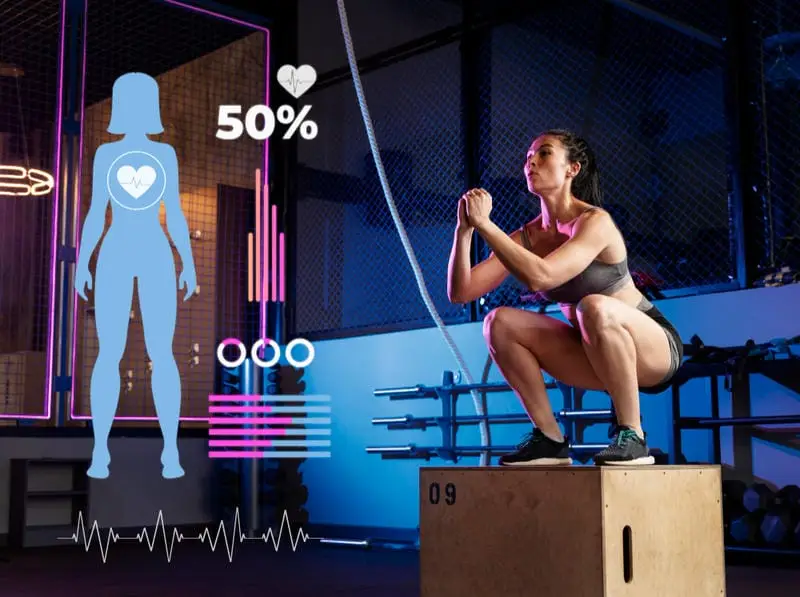
1. Bodyweight Squats: This exercise is excellent for building the muscles in your lower body, such as your glutes, hamstrings, and quadriceps. With your feet shoulder-width apart, take a seat by lowering your hips as if you were in a chair, then push through your heels to stand back up. Three sets of fifteen to twenty reps should be your goal.

2. Push-ups: This traditional workout works the muscles in your shoulders, triceps, core, and chest. With your hands shoulder-width apart, begin in the plank position. Lower your body until your chest almost touches the floor, then push yourself back up to the beginning position. If standard push-ups are too difficult for you, try doing them on your knees as an adaptation. Try to complete three sets of ten to fifteen repetitions.

3. Plank: Planks are a great way to develop the muscles in your core, such as your lower back, obliques, and abs. Begin in the push-up position and descend onto your forearms. Throughout, maintain a straight posture from head to heels while using your core muscles. For 30 to 60 seconds, hold this posture while paying attention to your form.

4. Lunges: This unilateral exercise works your calves, hamstrings, quadriceps, and glutes. Step forward with one foot and lower your torso until both knees are bent to a 90-degree angle. Begin by standing with your feet hip-width apart. To get back to standing, push through your front heel and repeat on the opposite side. Goal: 3 sets of 10–12 repetitions for each leg.

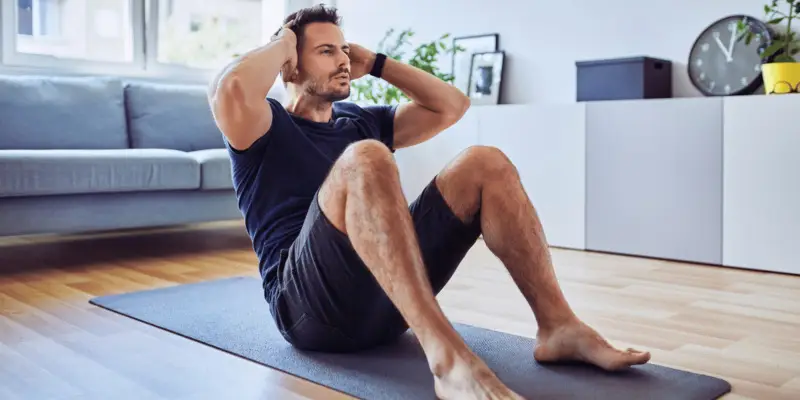
5. Bicycle Crunches: Bicycle Crunches are a fantastic exercise for strengthening your core and working your abdominal muscles. Stretch your legs toward your chest while lying on your back with your hands behind your head. Then, raise your shoulders off the floor and twist your body such that your right elbow points toward your left knee while extending your right leg

6. Burpees: For optimal calorie burn, burpees mix strength training and cardio. They are a full-body workout. Once you are standing, squat down and put your hands on the floor. Reposition your feet into a plank position, perform a push-up, then leap back towards your hands to launch yourself into a full leap. Get three sets of eight to ten repetitions.

7. Mountain climbers: A dynamic workout that strengthens your legs, shoulders, and core, mountain climbers also increase cardiovascular endurance. Begin in the plank position, then alternate between sprinting and bringing your knees close to your chest. Try to get three sets of 20–30 seconds.

8. Jumping jacks: are a basic yet powerful aerobic workout that stimulates every muscle in your body and raises your heart rate. Step out to the sides while extending your arms aloft, starting from a standing position with your feet together and your arms at your sides. Return to the beginning location and do it again. 3 sets of 30–60 seconds should be the goal.

9. Russian Twists: These exercises are excellent for strengthening your rotational core strength and toning your obliques. With your feet raised and your knees bent, take a seat on the ground. Then, slant your back a little and join your hands in front of you. Keep your core active throughout as you rotate your torso to the right and then the left.

10. High Knees: A high-intensity workout that targets your lower body muscles, such as your quads, hamstrings, and calves, high knees raise your heart rate. While keeping your arms raised, rapidly switch between pulling your knees as close to your chest as you can while standing still. 3 sets of 30–60 seconds should be the goal.

In conclusion, you don't need to join a gym or buy pricey equipment to stay active and fit. You can work out in the comfort of your own home with these ten efficient, no-equipment home workouts. These workouts will push your body and assist you in reaching your fitness objectives, regardless of your level of experience. So make place in your living room, turn on your go-to workout music, and get moving!

Read FAQs


A. Yes, you can achieve a great workout without any equipment at home by using your body weight for resistance. Bodyweight exercises can be highly effective for building strength, improving endurance, and enhancing overall fitness levels.

A. Bodyweight exercises are indeed effective for building strength and improving fitness. They engage multiple muscle groups simultaneously, helping you develop functional strength and improve stability and coordination. Additionally, bodyweight exercises can be easily modified to match your fitness level, making them suitable for beginners and experienced individuals alike.

A. You can modify bodyweight exercises in various ways to match your fitness level. For example, you can adjust the number of repetitions, the duration of each exercise, or the rest intervals between sets. You can also make exercises easier or more challenging by changing the leverage, range of motion, or tempo. Additionally, you can incorporate progressions or regressions of each exercise to gradually increase or decrease the difficulty as needed.

Read Blog
Stress and Destress

10 Simple Ways to Deal with Stress and Destress Yourself

Stress has become an unavoidable part of modern life. Work pressures, financial concerns, family responsibilities and constant digital connectivity place continuous demands on the mind and body. While occasional stress is a natural response, chronic stress can negatively affect mental health, immunity, sleep, digestion and heart health.

The good news is that stress does not always require complex solutions. Learning simple, practical ways to deal with stress can significantly improve emotional balance and overall wellbeing. Below are ten effective, evidence-backed strategies that can be easily incorporated into daily life.


1. Practice Deep Breathing

Deep breathing activates the body’s relaxation response.

Try this:

  • inhale slowly through the nose
     

  • hold briefly
     

  • exhale slowly through the mouth
     

Even five minutes of controlled breathing can reduce heart rate and calm the nervous system.


2. Move Your Body Regularly

Physical activity is one of the most effective stress relievers.

Benefits include:

  • reduced stress hormones
     

  • increased endorphins
     

  • improved mood and sleep
     

A short walk, stretching or light exercise can provide immediate relief.


3. Maintain a Consistent Sleep Routine

Poor sleep and stress reinforce each other.

Healthy sleep habits include:

  • fixed sleep and wake times
     

  • limiting screen use before bed
     

  • creating a calm sleep environment
     

Quality sleep improves stress resilience.


4. Limit Overstimulation from Screens

Excessive screen exposure increases mental fatigue.

To reduce stress:

  • take regular screen breaks
     

  • avoid screens before sleep
     

  • reduce constant notifications
     

Mental rest is essential for emotional balance.


5. Eat Regular, Balanced Meals

Irregular eating and poor nutrition worsen stress responses.

Focus on:

  • regular meal timings
     

  • whole foods
     

  • adequate hydration
     

Stable blood sugar supports stable mood and energy.


6. Break Tasks into Manageable Steps

Overwhelm often comes from trying to do too much at once.

Simplify by:

  • prioritising tasks
     

  • focusing on one step at a time
     

  • setting realistic goals
     

Small progress reduces mental pressure.


7. Spend Time Outdoors

Natural environments have a calming effect on the mind.

Benefits include:

  • lower stress levels
     

  • improved mood
     

  • mental clarity
     

Even brief outdoor exposure can reduce anxiety.


8. Practice Mindfulness or Relaxation Techniques

Mindfulness helps anchor attention to the present moment.

Simple practices include:

  • body awareness
     

  • guided relaxation
     

  • mindful breathing
     

Regular practice reduces stress reactivity.


9. Stay Socially Connected

Talking to someone you trust helps process stress.

Social support:

  • reduces emotional burden
     

  • offers perspective
     

  • improves coping ability
     

Human connection is a powerful stress buffer.


10. Create a Daily Wind-Down Routine

Ending the day calmly helps reset the nervous system.

Helpful habits include:

  • light stretching
     

  • reading
     

  • journaling
     

  • listening to calming music
     

A consistent routine signals safety and relaxation to the brain.


Why Stress Management Matters

Chronic stress contributes to:

  • anxiety and depression
     

  • heart disease
     

  • digestive issues
     

  • weakened immunity
     

  • poor concentration
     

Managing stress early prevents long-term health consequences.


Why Stress Is Often Ignored

Stress is normalised because:

  • it develops gradually
     

  • symptoms are invisible
     

  • people equate stress with productivity
     

Ignoring stress increases burnout risk.


When to Seek Professional Support

Professional help should be considered if:

  • stress persists for weeks
     

  • sleep is severely affected
     

  • daily functioning declines
     

  • physical symptoms appear
     

Early support improves recovery.


Building Long-Term Stress Resilience

Long-term stress management depends on:

  • consistent habits
     

  • realistic expectations
     

  • self-compassion
     

  • regular recovery time
     

Resilience grows through daily practice, not perfection.


Conclusion

Learning simple ways to deal with stress does not require major lifestyle changes. Small, consistent habits such as deep breathing, movement, sleep regulation and mindful routines can significantly reduce stress and restore emotional balance. Stress is a part of life, but it does not have to control it. By incorporating these ten simple strategies into daily routines, individuals can destress themselves effectively and protect both mental and physical health in the long run.


References

  • World Health Organization (WHO) – Stress and Mental Wellbeing Guidelines

  • Indian Council of Medical Research (ICMR) – Stress and Lifestyle Health Report

  •  National Institute of Mental Health – Stress Management Strategies

  • Lancet Psychiatry – Stress, Resilience and Mental Health Studies

  • Indian Journal of Psychiatry – Stress Reduction and Behavioural Health Research

  • Statista – Stress Trends and Workplace Mental Health Data

See all

Live Doctor consultation
Live Doctor Chat

Download Our App & Get Consultation from anywhere.

App Download
call icon for mobile number calling and whatsapp at secondmedic