• Published on: Nov 14, 2025
  • 4 minute read
  • By: Secondmedic Expert

Digital Pathology Solutions India: How SecondMedic Is Revolutionizing Diagnostics With AI And Remote Technology

  • WhatsApp share link icon
  • copy & share link icon
  • twitter share link icon
  • facebook share link icon

Pathology is the foundation of modern diagnosis. Nearly 70 percent of clinical decisions rely on pathology results, according to the Indian Council of Medical Research (ICMR). Yet India faces a significant shortage of trained pathologists, uneven access across rural regions, and growing diagnostic demand.

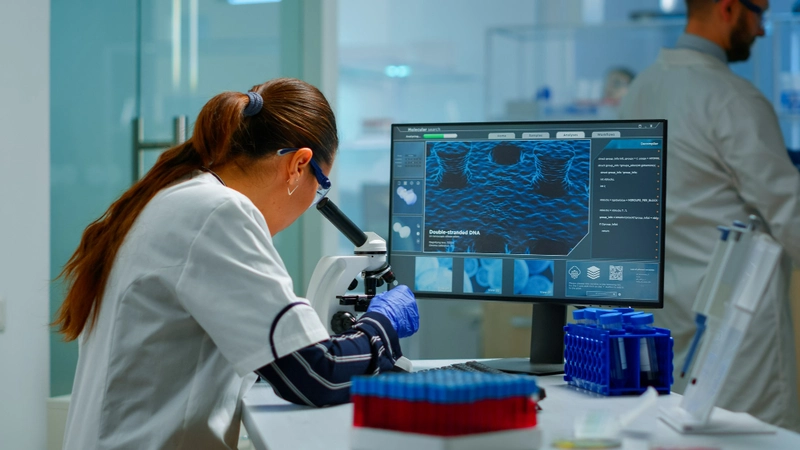
This is where digital pathology brings transformative potential. Using high-resolution scanners, telepathology platforms, AI algorithms, and cloud-based systems, digital pathology enables faster, more accurate, and scalable diagnostic workflows.

SecondMedic is leading this transformation by offering advanced digital pathology solutions that blend artificial intelligence, secure cloud access, and modern imaging tools—helping hospitals, labs, and clinicians deliver faster and higher-quality diagnostics.

What Is Digital Pathology?

Digital pathology is the process of converting traditional glass slides into digital images using specialized scanners. These images can be:

  • Zoomed, annotated, and analyzed using software

  • Reviewed remotely by pathologists

  • Enhanced using artificial intelligence

  • Stored securely in cloud systems

  • Linked directly to patient EHRs
     

This approach eliminates the limitations of manual microscopy and enables collaborative, fast, and scalable diagnostics.

Why Digital Pathology Matters for India

India’s healthcare system experiences several constraints:

  1. Shortage of qualified pathologists

  2. High patient-volume laboratories

  3. Geographic disparities in pathology access

  4. Slow manual workflows

  5. Limited pathology subspecialists in remote regions
     

Digital pathology addresses these gaps by enabling remote access, accelerated diagnosis, and AI-based accuracy.

Key Advantages of Digital Pathology

1. Faster Diagnosis

Digital slides can be reviewed immediately without physical transport delays.

2. Remote Access for Pathologists

Experts can analyze slides from anywhere in India, supporting rural and semi-urban hospitals.

3. AI-Assisted Accuracy

AI helps detect:

  • Cancerous cells

  • Cell morphology changes

  • Inflammatory patterns

  • Infectious organisms
     

This reduces diagnostic errors.

4. Centralized Data Storage

All pathology data is digitally stored and accessible for second opinions or follow-ups.

5. Enhanced Collaboration

Multiple specialists can review the same case remotely in real time.

SecondMedic’s Digital Pathology Ecosystem

SecondMedic offers a complete digital pathology suite designed for laboratories, hospitals, and diagnostic networks.

1. Digital Slide Scanning

High-resolution whole-slide imaging (WSI) converts samples into ultra-clear digital files. This eliminates the need for microscope-based analysis.

2. AI-Based Diagnostics

SecondMedic’s AI models assist in analyzing:

  • Histopathology slides

  • Cytology samples

  • Biopsy results
     

The system highlights suspicious areas, helping pathologists focus on critical regions.

3. Remote Reporting Platform

Pathologists can log in securely from any location to:

  • Review digital slides

  • Annotate findings

  • Upload reports

  • Communicate with clinicians
     

This enables 24/7 reporting capability for labs.

4. Integrated EHR Connectivity

All digital pathology reports sync with patient electronic records, enabling clinicians to review results instantly.

5. Cloud-Based Data Management

Secure cloud systems ensure:

  • Rapid access to stored slides

  • Easy retrieval for second opinions

  • Long-term archiving
     

This removes the risk of physical slide degradation.

Applications of Digital Pathology in India

Digital pathology is particularly beneficial for:

  • Oncology centers

  • Multispecialty hospitals

  • Telemedicine platforms

  • Rural healthcare facilities

  • Research institutes

  • High-volume diagnostic labs

  • Medical colleges

  • Corporate health programs
     

Its scalability makes it ideal for a country as vast as India.

The Role of AI in Pathology

AI enhances the accuracy and speed of diagnosis through:

  • Automated region detection

  • Quantification of cell clusters

  • Pattern recognition for cancer staging

  • Detection of rare abnormalities

  • Predictive modeling for disease progression
     

Studies indicate that AI-supported pathology improves diagnostic consistency and reduces human oversight errors.

Addressing India’s Pathology Challenges

Digital pathology helps solve critical challenges such as:

  • Limited pathology subspecialists

  • Delays in biopsy diagnosis

  • Inconsistent manual interpretation

  • Inefficient workflow management

  • Difficulty in storing physical slides
     

With digital systems, hospitals can deliver high-quality diagnostics without geographical constraints.

Future of Digital Pathology in India

According to IMARC’s 2025 report, the digital pathology market in India is projected to grow significantly due to:

  • Increasing cancer cases

  • AI adoption

  • Diagnostic automation

  • Telehealth expansion

  • Government digital health initiatives
     

SecondMedic is investing in next-gen pathology capabilities, including:

  • Automated tumor grading

  • Predictive biomarker analysis

  • Deep-learning-based histopathology models

  • Blockchain-secured pathology records

  • Multi-location digital reporting networks
     

These advancements will redefine how pathology is practiced in India.

Why Hospitals and Labs Choose SecondMedic

The key benefits include:

  • Customizable digital solutions

  • Affordable setup and scalability

  • HIPAA and ABDM-compliant security

  • Multi-device accessibility

  • End-to-end implementation support

  • Continuous upgrades and AI enhancements
     

SecondMedic makes digital pathology accessible to both small labs and large diagnostic networks.

Conclusion

Digital pathology is the future of diagnostics in India. With AI-driven accuracy, remote accessibility, and fast turnaround times, it empowers clinicians to deliver better patient outcomes. SecondMedic’s digital pathology ecosystem enables hospitals and laboratories to modernize workflows while ensuring precision and efficiency.

To explore digital pathology solutions tailored for your institution, visit www.secondmedic.com

References

  1. NITI Aayog – Digital Health Vision 2024

  2. ICMR – Pathology and Diagnostics Report 2024

  3. IMARC Group – India Digital Pathology Market Forecast 2025

  4. WHO – Cancer Screening and Diagnosis Standards

  5. ABDM – Health Data and Interoperability Guidelines

Read FAQs


A. Digital pathology uses high-resolution scanners, software, and AI tools to convert glass slides into digital images that can be analyzed and shared remotely.

A. India has a shortage of trained pathologists. Digital pathology enables remote reporting, faster diagnosis, improved accuracy, and better access to expertise.

A. By offering digital slide scanning, AI-enabled diagnostic tools, remote reporting, integrated EHR connectivity, and cloud-based storage for pathology data.

A. Yes. AI models assist pathologists by detecting patterns related to cancer, infections, and cell abnormalities, improving accuracy and reducing human error.

A. Yes. SecondMedic offers customizable digital pathology modules that integrate with existing laboratory information systems (LIS) and hospital workflows.

Read Blog
Patients

Monthly Field Day with Patients & Staff: Building Trust, Engagement, and Wellbeing

Healthcare is built on relationships. While diagnosis, treatment and technology are critical, the human connection between patients and healthcare staff remains central to healing and recovery. A Monthly Field Day with Patients & Staff is a thoughtful initiative designed to strengthen these relationships by creating opportunities for interaction outside routine clinical environments.

In today’s healthcare systems, patient engagement and staff wellbeing are recognised as essential components of quality care. Monthly field days provide a structured yet informal platform to support both.


What Is a Monthly Field Day with Patients & Staff?

A Monthly Field Day is a planned engagement event where patients and healthcare staff come together to participate in non-clinical activities. These events focus on:

  • interaction
     

  • wellbeing
     

  • communication
     

  • community-building
     

They are not medical appointments but shared experiences that promote trust and understanding.


Why Field Days Matter in Healthcare

Healthcare Is Emotionally Demanding

Patients often experience anxiety, fear and uncertainty. Staff face long hours, emotional stress and high responsibility. Field days offer a space for:

  • relaxed interaction
     

  • emotional connection
     

  • mutual understanding
     

This humanises care delivery.


Strengthening Patient–Staff Trust

Trust grows through:

  • open communication
     

  • shared experiences
     

  • consistent engagement
     

Field days reduce perceived barriers between patients and healthcare teams.


Benefits for Patients

Improved Comfort and Confidence

Patients feel more at ease when they know the people involved in their care beyond clinical roles.


Better Engagement in Care

Engaged patients are more likely to:

  • ask questions
     

  • follow care plans
     

  • attend follow-ups
     

This leads to improved health outcomes.


Emotional and Social Wellbeing

Social interaction, light activity and positive experiences support mental and emotional health, especially for patients with chronic conditions.


Benefits for Healthcare Staff

Reduced Burnout

Regular non-clinical engagement helps:

  • reduce emotional fatigue
     

  • restore motivation
     

  • improve job satisfaction


Stronger Team Relationships

Shared activities strengthen teamwork and communication among staff members.


Renewed Sense of Purpose

Seeing patients outside stressful clinical settings reinforces the meaningful impact of healthcare work.


Organisational Benefits

Enhanced Patient-Centered Culture

Field days reinforce values of empathy, accessibility and respect.


Improved Patient Satisfaction

Trust and familiarity contribute to better patient experiences and feedback.


Better Communication and Feedback

Informal settings encourage honest dialogue, helping organisations understand patient needs and expectations.


Activities Commonly Included in Field Days

Wellness Activities

  • gentle exercises
     

  • stretching or yoga
     

  • breathing sessions


Educational Interactions

  • health awareness talks
     

  • preventive care discussions
     

  • lifestyle guidance


Recreational and Social Activities

  • group games
     

  • creative sessions
     

  • interactive challenges
     

These activities promote joy, connection and inclusion.


Inclusivity and Accessibility

Effective field days are:

  • inclusive of different age groups
     

  • adaptable for physical limitations
     

  • culturally sensitive
     

  • welcoming and non-competitive
     

Inclusivity ensures meaningful participation for all.


Why Monthly Frequency Works Best

Monthly scheduling:

  • maintains continuity
     

  • builds long-term trust
     

  • prevents disengagement
     

  • supports gradual relationship building
     

Consistency transforms engagement into culture.


Evidence Supporting Engagement Initiatives

Research shows that:

  • patient engagement improves health outcomes
     

  • staff wellbeing reduces errors and burnout
     

  • relationship-based care enhances satisfaction
     

Global health frameworks emphasise people-centred care models.


Measuring the Impact of Field Days

Impact can be evaluated through:

  • patient feedback
     

  • staff engagement surveys
     

  • participation rates
     

  • qualitative testimonials
     

Regular assessment helps refine the program.


Implementing a Successful Monthly Field Day

Key elements include:

  • leadership support
     

  • clear objectives
     

  • simple, inclusive activities
     

  • consistent scheduling
     

  • feedback-driven improvement
     

Success depends on commitment rather than scale.


Long-Term Impact on Healthcare Culture

Over time, Monthly Field Days contribute to:

  • stronger trust
     

  • improved communication
     

  • better morale
     

  • enhanced care experience
     

They reinforce the idea that healthcare is a partnership between people.


Conclusion

A Monthly Field Day with Patients & Staff is more than an engagement activity—it is a meaningful investment in trust, wellbeing and human connection. By creating shared experiences beyond clinical settings, healthcare organisations strengthen relationships that directly influence care quality and satisfaction. In an environment often driven by efficiency and outcomes, monthly field days remind us that compassion, communication and community remain at the heart of effective healthcare.


References

  • World Health Organization (WHO) – People-Centred Care and Patient Engagement

  • Indian Council of Medical Research (ICMR) – Patient Experience and Care Quality Studie

  •  Lancet – Patient–Provider Relationships and Health Outcomes

  • National Health Systems Resource Centre – Community Engagement in Healthcare

  • Indian Journal of Healthcare Management – Staff Wellbeing and Patient Satisfaction

  • Statista – Healthcare Engagement and Experience Trends

See all

Live Doctor consultation
Live Doctor Chat

Download Our App & Get Consultation from anywhere.

App Download
call icon for mobile number calling and whatsapp at secondmedic