Navratri fasting is often associated with light eating, detoxification, and spiritual discipline. But nutritionally, it can become surprisingly unbalanced. Many people end up relying heavily on fried vrat snacks, potatoes, sugary beverages, sabudana, and packaged fasting foods that provide calories without enough fibre, hydration, iron, or micronutrients.
That is where simple foods like spinach and cucumber become important. They are not traditionally seen as the “main” fasting foods, yet both offer something most Navratri diets quietly lack: hydration, digestive support, micronutrient density, and metabolic balance.
For people experiencing acidity, bloating, constipation, fatigue, headaches, or sluggishness during fasting, these two ingredients can help make the diet feel lighter and nutritionally steadier without making meals heavy.
In Indian dietary patterns, Navratri fasting has changed significantly over the years. Traditional home-cooked vrat meals have increasingly been replaced by processed fasting chips, deep-fried snacks, high-salt namkeen mixtures, sweetened drinks, and restaurant-style fasting thalis. According to ICMR dietary observations and urban nutrition studies, festival fasting in metropolitan India is now frequently associated with excessive refined starch intake and low fibre consumption.
Doctors often see a predictable pattern during Navratri:
- acidity worsens
- constipation increases
- hydration drops
- blood sugar fluctuates
- energy crashes occur by evening
This becomes especially common among working professionals fasting while continuing long office hours, commuting, inadequate sleep, and low water intake.
“Patients assume fasting automatically means eating healthy, but clinically we often see the opposite,” says Clinical Nutrition Specialist at SecondMedic. “The body starts reacting to dehydration, excessive starch intake, low protein, and irregular meal timing. Foods like cucumber and spinach help restore balance because they support hydration, digestion, and micronutrient intake during fasting.”
Why Cucumber Works So Well During Navratri
Cucumber is one of the most hydrating foods commonly available in Indian households. Since fasting diets often reduce overall water-rich food intake, cucumber helps compensate naturally.
Many people underestimate how dehydration contributes to fasting discomfort. Headaches, weakness, dizziness, fatigue, acidity, and constipation during Navratri are frequently linked to inadequate hydration rather than “lack of energy.”
Cucumber contains:
- high water content
- potassium
- small amounts of fibre
- antioxidants
- digestive-supportive compounds
What makes it particularly useful during fasting is that it feels light on the stomach. Unlike oily vrat snacks that slow digestion and worsen heaviness, cucumber adds volume and hydration without making meals calorie-dense.
For people who experience:
- bloating
- acidity
- excessive body heat
- sluggish digestion
- post-meal heaviness
cooling foods like cucumber are often easier to tolerate.
A 38-year-old banking professional from Ahmedabad consulted SecondMedic after experiencing repeated acidity and constipation every Navratri despite “eating less.” Dietary review showed that most meals consisted of sabudana khichdi, fried peanuts, potato chips, and tea. Once hydration improved and fresh cucumber-based salads were introduced during daytime meals, symptoms reduced significantly within days.
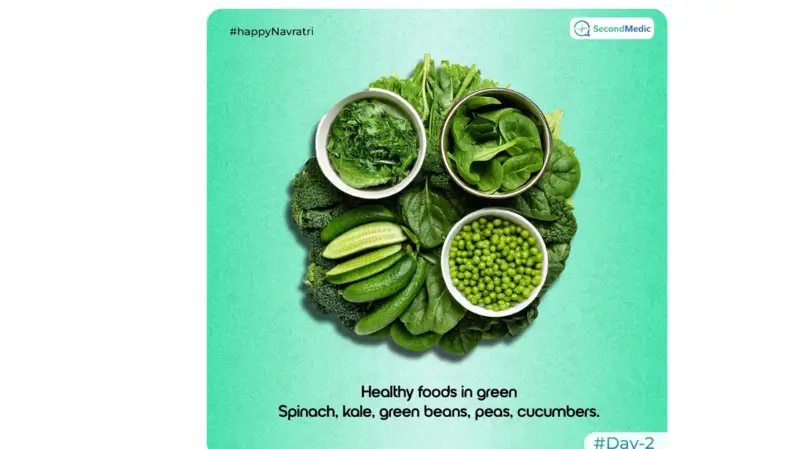
Spinach Is One of the Most Nutrient-Dense Foods in a Fasting Diet
Spinach becomes especially valuable during fasting because many Navratri meals unintentionally become low in iron, folate, magnesium, and fibre.
Spinach helps compensate for some of those nutritional gaps naturally.
It contains:
- iron
- folate
- fibre
- magnesium
- vitamin A
- vitamin K
- plant antioxidants
During fasting, reduced meal diversity sometimes causes low energy levels not because calories are insufficient, but because micronutrient intake becomes inconsistent.
Spinach also supports digestive regularity, which matters because constipation is one of the most overlooked Navratri complaints.
Many fasting foods are:
- low in fibre
- starch-heavy
- salt-rich
- fried repeatedly
This slows bowel movement and worsens bloating. Adding spinach to soups, vrat-friendly curries, smoothies, or light sautéed meals can improve fibre intake without making meals overly heavy.
Why These Foods Help With Acidity During Fasting
One reason acidity becomes common during Navratri is because fasting patterns change stomach acid behaviour.
People often:
- skip meals for long hours
- drink excessive tea
- eat spicy fried vrat foods late at night
- consume large portions after prolonged fasting
This combination can irritate the stomach lining and worsen acid reflux symptoms.
Both cucumber and spinach may help because they are relatively light, fibre-containing, and easier to digest compared to heavily fried fasting foods.
However, the benefit depends on preparation style.
For example:
- cucumber salads with excess green chilli and fried peanuts may worsen acidity
- spinach cooked in excessive oil or cream loses its digestive advantage
- packaged “healthy fasting snacks” often contain high sodium and additives
The healthiest Navratri meals are usually the simplest ones.
The Biggest Mistake People Make During Navratri Dieting
Many people unintentionally turn fasting into a cycle of:
- long starvation periods
- sudden overeating
- sugar cravings
- fried snacking
- caffeine dependence
This creates energy instability throughout the day.
Doctors often notice that patients who fast more comfortably usually:
- hydrate consistently
- avoid overeating at night
- include fresh foods
- reduce fried snacks
- maintain moderate meal timing
Cucumber and spinach help because they add freshness and nutritional density to meals that otherwise become starch-dominated.
Easy Ways to Include Cucumber and Spinach in a Navratri Diet
The goal is not to create complicated “diet food,” but to make fasting meals nutritionally steadier.
Simple approaches work best:
- cucumber raita with mild seasoning
- cucumber-mint chaas
- vrat-friendly spinach soup
- sautéed spinach with cumin
- cucumber bowls with curd and roasted peanuts
- spinach added to singhara atta preparations
These combinations improve satiety while reducing digestive heaviness.
Myths vs Facts About Healthy Navratri Eating
| Myth | Fact |
|---|---|
| “Fasting automatically detoxes the body.” | Poor-quality fasting food can worsen digestion and inflammation. |
| “Eating less means healthier fasting.” | Nutritional balance matters more than simply reducing quantity. |
| “Sabudana alone provides enough nutrition.” | Sabudana is mainly carbohydrate-heavy and low in protein and fibre. |
| “Fruit and vegetables are optional during Navratri.” | Fresh foods help maintain hydration, digestion, and micronutrient intake. |
| “Fried vrat snacks are harmless because they are eaten during fasting.” | Excess fried food may worsen acidity, bloating, and lethargy. |
Who Should Be More Careful During Navratri Fasting?
Certain individuals should avoid aggressive fasting patterns without medical guidance:
- diabetic patients
- elderly individuals
- pregnant women
- people with severe acidity
- patients with kidney disease
- those with eating disorders
- people prone to migraines or dehydration
Extended fasting combined with poor hydration may worsen existing health conditions.
SecondMedic’s Approach
SecondMedic helps patients consult verified nutritionists, gastroenterologists, and internal medicine specialists online for acidity, digestive problems, nutritional guidance, diabetes management, and fasting-related health concerns. Patients experiencing weakness, bloating, acidity, constipation, or unstable blood sugar during fasting can receive personalised dietary guidance without unnecessary clinic visits.