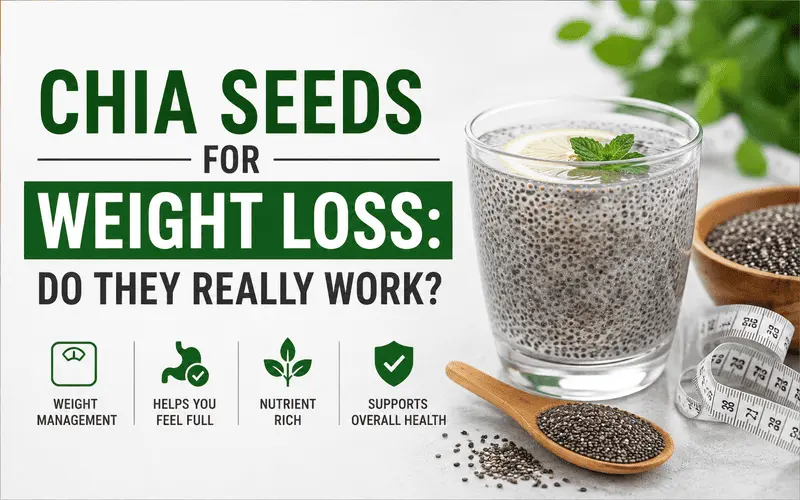
Chia seeds have become one of the most talked-about "superfoods" in the weight loss space. Social media posts often portray them as a simple solution for reducing belly fat, curbing appetite, and accelerating metabolism. However, the science behind chia seeds is far more nuanced than the claims suggest.
Chia seeds can support a weight loss journey, but they do not directly burn fat or produce dramatic results on their own. Their value lies in how they fit into an overall healthy eating pattern. Understanding what chia seeds can realistically offer helps set appropriate expectations and prevents disappointment from exaggerated promises.
Can Chia Seeds Help With Weight Loss?
Chia seeds may support weight loss efforts by promoting fullness and improving dietary quality, but they are not a standalone treatment for obesity.
Derived from the Salvia hispanica plant, chia seeds are rich in dietary fiber, plant-based protein, omega-3 fatty acids, and antioxidants. These nutritional properties have led researchers to investigate whether they influence appetite regulation and body weight.
Current evidence suggests that chia seeds work best as a supportive dietary component rather than a weight loss shortcut. Sustainable weight loss still depends primarily on maintaining a calorie deficit through balanced nutrition and regular physical activity.
The important distinction is this: chia seeds may make healthy eating easier, but they do not replace healthy eating itself.
Why Are Chia Seeds Associated With Weight Loss?
The connection between chia seeds and weight management stems largely from their nutritional composition.
One tablespoon of chia seeds contains a significant amount of dietary fiber. When mixed with liquid, the seeds absorb water and form a gel-like consistency. This process slows digestion and may prolong feelings of fullness after meals.
In practical terms, individuals who feel satisfied for longer periods may be less likely to snack excessively or consume large portions at subsequent meals.
Chia seeds also provide a modest amount of plant protein. Although they are not a high-protein food compared with eggs or dairy products, protein contributes to satiety and supports muscle maintenance during calorie restriction.
These characteristics help explain why chia seeds are often included in weight management plans. However, they influence eating behavior indirectly rather than triggering fat loss directly.
What Does the Research Actually Say?
This is where the conversation often diverges from popular health trends.
Several studies have explored the relationship between chia seed consumption and body weight. While some findings suggest improvements in satiety and dietary adherence, the evidence supporting significant weight reduction remains limited.
A review of available research indicates that chia seeds alone do not consistently produce clinically meaningful weight loss. The greatest benefits appear when they are incorporated into broader lifestyle interventions involving balanced nutrition and physical activity.
For example, an individual replacing a calorie-dense snack with a fiber-rich chia pudding may reduce overall energy intake. In contrast, simply adding chia seeds to an already excessive diet is unlikely to influence body weight.
The evidence therefore supports a realistic conclusion. Chia seeds can be a useful tool, but they are not a miracle food.
Can Chia Seeds Reduce Belly Fat?
One of the most common misconceptions is that certain foods specifically target abdominal fat.
From a physiological perspective, spot reduction does not occur. The body determines where fat is lost based on genetics, hormones, age, and overall energy balance.
Chia seeds cannot selectively eliminate belly fat.
However, because they may help improve satiety and support healthier eating habits, they can indirectly contribute to overall fat loss. As total body fat decreases, abdominal fat often declines as well.
The distinction is important because marketing messages frequently oversimplify the process of weight reduction.
No seed, drink, supplement, or single food can independently melt belly fat.
How Can Chia Seeds Be Included in a Weight Loss Diet?
The effectiveness of chia seeds often depends on how they are incorporated into meals.
Adding large amounts of chia seeds to high-calorie desserts is unlikely to support weight management goals. On the other hand, using them to enhance the nutritional quality of balanced meals may be beneficial.
Common ways to consume chia seeds include:
- Stirring them into plain yogurt.
- Adding them to oatmeal.
- Preparing chia pudding with milk and fruit.
- Mixing them into smoothies.
- Sprinkling them over salads.
Portion awareness remains important. Chia seeds are nutrient-dense but also contain calories.
Their role should be viewed as part of a healthy dietary pattern rather than an addition without considering overall intake.
How Much Chia Seeds Should Be Consumed?
Most dietary recommendations suggest limiting intake to approximately 1 to 2 tablespoons per day.
Because chia seeds contain substantial amounts of fiber, introducing them gradually may help reduce digestive discomfort.
Adequate fluid intake is equally important. Since chia seeds absorb large amounts of water, consuming them with sufficient liquids supports digestion and reduces the likelihood of bloating or constipation.
More is not necessarily better.
Excessive consumption does not accelerate weight loss and may increase gastrointestinal side effects.
Who Should Exercise Caution?
Although chia seeds are safe for most individuals, certain groups should use them carefully.
People with swallowing difficulties should avoid consuming dry chia seeds because they expand when exposed to liquid.
Individuals taking medications that affect blood clotting should discuss significant dietary changes with their healthcare provider, as chia seeds contain omega-3 fatty acids that may influence bleeding risk in certain circumstances.
Those with digestive sensitivities may also benefit from introducing chia seeds gradually rather than consuming large quantities immediately.
As with any dietary change, individual tolerance and medical history should be considered.
The Bigger Picture of Weight Loss
The popularity of chia seeds reflects a broader desire for simple solutions to complex health challenges.
However, long-term weight management rarely depends on a single food.
Successful and sustainable weight loss typically results from consistent habits such as maintaining a balanced diet, engaging in regular physical activity, prioritizing sleep, and managing stress.
Within this framework, chia seeds can serve as a practical addition by improving satiety and enhancing nutritional quality.
They are best viewed as a supporting actor rather than the main strategy.
References
- Harvard T.H. Chan School of Public Health. Chia Seeds
https://nutritionsource.hsph.harvard.edu/food-features/chia-seeds/ - Cleveland Clinic. Are Chia Seeds Good for Weight Loss?
https://health.clevelandclinic.org/chia-seeds-benefits - Academy of Nutrition and Dietetics. Weight Management Resources
https://www.eatright.org/health/weight-loss - National Center for Biotechnology Information. Chia Seed and Human Health
https://www.ncbi.nlm.nih.gov/pmc/articles/PMC4926888/ - Mayo Clinic. Weight Loss Basics
https://www.mayoclinic.org/healthy-lifestyle/weight-loss/in-depth/weight-loss/art-20047752