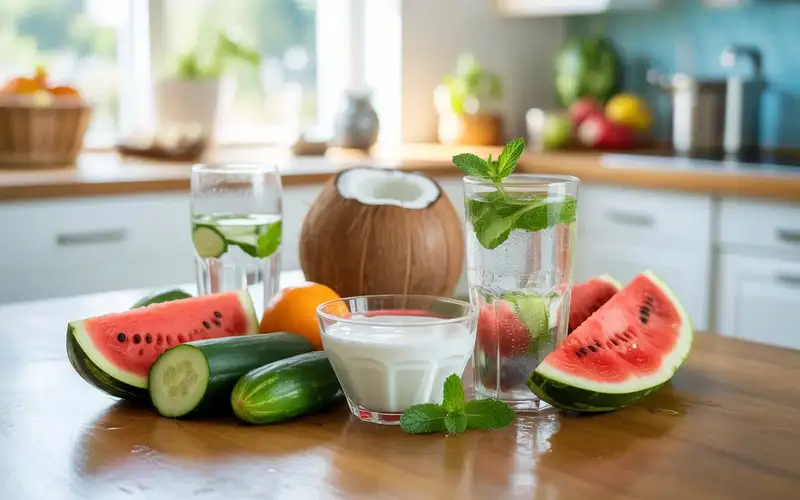
What you eat directly determines how hot or cool your body runs. Every food consumed requires metabolic energy to digest, and this digestive process generates heat as a byproduct, a phenomenon known as the Thermic Effect of Food (TEF). Foods with a high TEF, such as red meat and spicy dishes, significantly raise internal body temperature during digestion. Foods with a low TEF, combined with high water content and specific cooling phytochemicals, actively assist the body in dissipating heat. During Indian summers, when ambient temperatures routinely exceed 40 degrees Celsius, dietary choices become one of the most accessible and effective tools for thermoregulation.
How Diet Affects Body Temperature
The body maintains its core temperature through sweating, blood circulation, and respiration. Diet influences this process through three primary mechanisms:
Water content: Foods with high water content directly contribute to hydration, supporting sweat production. Sweat evaporation is the body's primary cooling mechanism, and inadequate hydration impairs it significantly.
Thermic Effect of Food (TEF): Protein digestion generates the most heat (20 to 30 percent of calories consumed as heat), followed by carbohydrates (5 to 10 percent) and fats (0 to 3 percent). Choosing low-protein, high-carbohydrate, and high-water foods during summer reduces the digestive heat burden on the body.
Bioactive cooling compounds: Certain foods contain phytochemicals that directly activate cold receptors, reduce inflammation, or support the gut microbiome in ways that lower systemic heat. Menthol in mint activates TRPM8 cold receptors. Curcumin in turmeric reduces inflammatory cytokines. Electrolytes in coconut water restore the mineral balance required for efficient thermoregulation.
Understanding these mechanisms allows for more informed and targeted food choices rather than simply following generic lists.
Which Foods Reduce Body Heat Immediately?
For rapid cooling effect, nutritionists and general physicians recommend the following foods based on their water content, electrolyte profile, and cooling bioactive compounds:
| Food | Water Content | Cooling Mechanism | Best Form |
|---|---|---|---|
| Watermelon | 92% | Hydration, lycopene reduces sun-induced inflammation | Fresh, chilled, no added salt |
| Cucumber | 96% | Silica and antioxidants reduce internal inflammation, mild diuretic | Raw in salad or juiced with mint |
| Coconut water | 95% | Replenishes potassium and magnesium lost through sweat | Fresh, at room temperature |
| Curd or yogurt | 85% | Probiotics cool gut microbiome, lactic acid reduces gastric heat | Plain, with meals or as raita |
| Bottle gourd (Lauki) | 96% | Highest water content among vegetables, mild diuretic | Cooked sabzi or fresh juice |
| Muskmelon (Kharbooja) | 90% | Vitamins A and C, high water content, aids kidney cooling | Fresh, chilled |
| Mint (Pudina) | 85% | Menthol activates TRPM8 cold receptors, reduces perceived heat | Chutney, raita, or infused water |
| Lettuce | 96% | High water content, extremely low TEF, almost zero digestive heat | Raw in salads |
These foods provide measurable cooling relief within 20 to 30 minutes of consumption when eaten in appropriate quantities and without high-heat cooking methods that destroy their water content and bioactive compounds.
Which Fruits Are Best for Reducing Body Heat?
Fruits are among the most effective natural cooling agents due to their combination of high water content, natural electrolytes, antioxidants, and low thermic effect. The following fruits are specifically recommended for summer consumption in India:
Watermelon: Contains 92 percent water and lycopene, an antioxidant that reduces UV-induced oxidative stress. Lycopene also reduces the inflammatory heat response triggered by sun exposure, making watermelon uniquely effective for individuals spending time outdoors.
Muskmelon (Kharbooja): Rich in Vitamin A and C with a water content of approximately 90 percent. Muskmelon supports kidney function, aids in flushing excess heat-generating metabolic waste, and is gentle on the digestive system.
Raw Mango (Kacha Aam): One of the most celebrated Indian summer fruits. Raw mango in the form of aam panna is clinically recognised as an electrolyte-rich cooling drink that prevents heat exhaustion. It contains Vitamin C, iron, and natural acids that support liver function and gut cooling.
Amla (Indian Gooseberry): Considered the most potent Pitta-pacifying fruit in Ayurveda. Amla's exceptional Vitamin C content (20 times higher than orange) reduces systemic inflammation and oxidative heat. Best consumed as fresh juice on an empty stomach in summer.
Peach and Plum: Both have high water content and mild cooling properties. Widely available in North India during summer months and suitable for all age groups including children and the elderly.
Lychee: While lychee is cooling when consumed in moderation, excess consumption generates heat. A maximum of 8 to 10 lychees per day is the clinically recommended limit during summer.
Which Drinks Help Cool Down Body Heat Naturally?
A dedicated cooling drinks section is entirely absent from all three competitor articles despite beverages being the fastest-acting dietary intervention for body heat. The following Indian cooling drinks are nutritionally validated and deeply rooted in traditional summer practice:
| Drink | Key Cooling Compounds | Best Consumption Time |
|---|---|---|
| Coconut water | Potassium, magnesium, natural electrolytes | Morning or post-exercise |
| Aam Panna | Raw mango, cumin, black salt: prevents heat exhaustion | Midday, peak heat hours |
| Sabja sherbet | Sabja seeds absorb gut heat, rose water cools systemically | Afternoon |
| Sattu drink | Roasted gram flour: low TEF, cooling and filling | Morning or as a meal replacement |
| Khus (Vetiver) water | Vetiver root cools the digestive tract and reduces Pitta | Morning on empty stomach |
| Buttermilk (Chaas or Mor) | Probiotics, lactic acid, electrolytes | With lunch or post-meal |
| Coriander seed water | Anti-inflammatory, reduces gastric and urinary heat | Morning, fasted |
| Fennel seed water (Saunf) | Carminative, reduces gut heat and bloating | Post meals |
| Lemon water with rock salt | Vitamin C, electrolyte replenishment | Anytime during the day |
Preparation note for Sabja sherbet: Soak one teaspoon of sabja seeds in 200 ml of water for 15 minutes until they swell into a gel. Add rose water and a small amount of sugar or honey. This drink directly coats and cools the digestive tract and is one of the fastest-acting natural cooling beverages available.
Preparation note for Aam Panna: Boil or roast one raw mango, extract the pulp, blend with water, cumin powder, black salt, and mint. Consume chilled. Clinical evidence supports its use in preventing electrolyte depletion during Indian heat waves.
Best Indian Foods to Reduce Body Heat
Beyond fruits and drinks, the following Indian dietary staples carry significant cooling properties that are entirely overlooked by all three competitors:
Curd rice: A South Indian staple that combines the probiotic cooling of curd with the low-TEF carbohydrate base of rice. Dermatologists and nutritionists in South India consistently recommend curd rice as the ideal summer meal due to its combined gut-cooling and hydration benefit.
Moong dal: Among all lentils, moong dal has the lowest thermic effect and is the easiest to digest. It generates minimal digestive heat compared to other dals and proteins, making it the recommended dal choice during summer months.
Sattu: Made from roasted gram flour, sattu is one of North India's most effective summer foods. It is high in fibre, low in glycaemic index, cooling in nature according to Ayurveda, and provides sustained energy without the metabolic heat spike associated with processed foods.
Kokum sherbet: Widely consumed in Maharashtra, Goa, and coastal Karnataka, kokum (Garcinia indica) contains hydroxycitric acid and anthocyanins that reduce internal heat and support digestion. It is particularly effective for reducing acidity and gastric burning associated with summer heat.
Rice kanji or Congee: A thin rice porridge consumed in Kerala and Tamil Nadu during summer. Its high water content, easy digestibility, and minimal TEF make it an ideal light summer meal, particularly for the elderly and those recovering from heat exhaustion.
Which Foods Should Be Avoided as They Increase Body Heat?
This section is missing from all three competitor articles. Understanding which foods worsen body heat is as important as knowing which foods cool it:
| Food | Why It Increases Body Heat |
|---|---|
| Red meat | Highest TEF among foods (25 to 30%); generates significant digestive heat |
| Spicy foods with red chilli | Capsaicin binds to TRPV1 heat receptors, triggering thermogenic response |
| Fried and processed snacks | High fat content; fat digestion is slow and generates sustained heat |
| Excess tea and coffee | Diuretics that deplete hydration; caffeine raises metabolic rate mildly |
| Alcohol | Causes vasodilation followed by dehydration; severely impairs thermoregulation |
| Dry fruits in excess | Walnuts, almonds, and cashews are thermogenic; limit to 4 to 5 pieces daily in summer |
| Eggs in large quantities | High protein TEF; best consumed as a single egg rather than multiple during summer |
| Refined sugar and sweets | Triggers inflammatory response and spikes insulin, contributing to systemic heat |
The single most impactful dietary change an Indian adult can make in summer is reducing chai consumption from three to four cups to one cup daily and replacing it with a cooling drink such as chaas, coconut water, or sabja sherbet.
Body Cooling Foods for Specific Groups
This group-specific guidance is entirely absent from all three competitor articles and addresses a high-value user intent layer:
For children: Children have a higher surface-area-to-body-mass ratio and lose fluids faster than adults. Watermelon, muskmelon, coconut water, and fresh fruit juices without added sugar are the most appropriate cooling foods. Avoid giving children sabja seeds below the age of five due to choking risk. Ensure hydration every 30 to 45 minutes during outdoor play.
For diabetics: Many cooling fruits such as watermelon, mango, and lychee have moderate to high glycaemic indices. Diabetic patients should prioritise cucumber, bottle gourd, curd, coconut water, and moong dal as their primary cooling foods. Fruits should be consumed in controlled portions and never as juice, which concentrates the sugar content. Aam panna made with minimal sugar and sattu drink with no added sweetener are safe summer beverage options.
For the elderly: Older adults have a significantly diminished thirst sensation, meaning they often become dehydrated before feeling thirsty. Hydration through food, particularly water-rich fruits and curd-based dishes, is especially important. Curd rice, moong dal khichdi, coconut water, and buttermilk should be consumed proactively rather than in response to thirst. Avoid sattu for elderly individuals with digestive sensitivity as its high
This information is for educational purposes only and does not constitute medical advice. Individuals with existing medical conditions including diabetes, kidney disease, or thyroid disorders should consult a qualified physician or clinical nutritionist before making significant dietary changes during summer.