• Published on: Mar 10, 2025
  • 3 minute read
  • By: SecondMedic Expert

Nanorobots: The Future Of Targeted Cancer Therapy

  • WhatsApp share link icon
  • copy & share link icon
  • twitter share link icon
  • facebook share link icon

Cancer remains one of the most challenging diseases to treat. Despite significant advancements in medicine, traditional cancer therapies such as chemotherapy and radiation often come with severe side effects. However, the emergence of nanorobots in cancer treatment is revolutionizing oncology, offering targeted, efficient, and less harmful solutions.

Understanding Nanorobots in Cancer Treatment

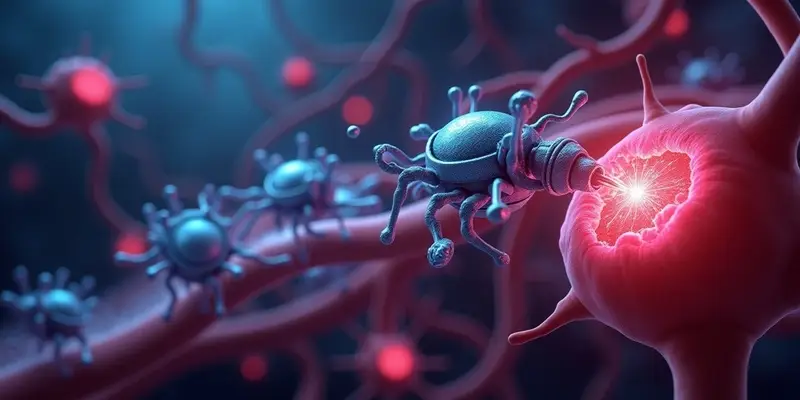
Nanorobots in cancer treatment are microscopic machines engineered to navigate the human body and deliver medication directly to cancerous cells. These minuscule devices are part of nanomedicine for cancer, a cutting-edge field that integrates nanotechnology to diagnose, monitor, and treat cancer. Unlike conventional methods, nanorobots can precisely locate and attack tumor cells without damaging surrounding healthy tissue.

How Nanorobots Work in Cancer Therapy

The concept of nanotechnology in oncology involves designing nanorobots that can circulate through the bloodstream, identifying cancer cells based on specific biological markers. Once detected, they release a controlled dose of chemotherapy or other therapeutic agents. This targeted drug delivery system significantly reduces toxicity, minimizing side effects such as nausea, fatigue, and immune suppression.

Additionally, nanorobots can be programmed to perform specific tasks such as:

  • Detecting and binding to cancer cells with high specificity.

  • Destroying tumor tissues using thermal or chemical mechanisms.

  • Monitoring cancer progression in real time.

  • Enhancing immune system response to fight cancer naturally.

Advancements in Cancer Nanorobotics

The development of advancements in cancer nanorobotics is accelerating due to breakthroughs in materials science, artificial intelligence, and biomedical engineering. Researchers are continuously improving the efficiency, biocompatibility, and safety of these nanodevices.

Latest Developments in Nanorobotics

  1. DNA-Based Nanorobots: Scientists have successfully designed nanorobots made from folded strands of DNA, allowing for highly precise drug delivery.

  2. Magnetic Nanoparticles: These can be guided using external magnetic fields to navigate and target tumor sites.

  3. Self-Propelled Nanorobots: These use biological enzymes or chemical reactions to move autonomously within the body.

  4. Smart Biosensors: Integrated within nanorobots, these sensors detect cancer cells at an early stage, increasing the chances of successful treatment.

  5. Biodegradable Nanorobots: These dissolve harmlessly in the body after completing their therapeutic mission.

Such advancements in cancer nanorobotics are paving the way for precision medicine, where treatments are personalized based on a patient’s genetic and molecular profile.

Benefits of Nanorobot-Based Cancer Therapy

The integration of nanomedicine for cancer presents several advantages over conventional therapies:

  • Higher Accuracy: Nanorobots ensure that drugs are delivered directly to cancerous cells, reducing damage to healthy tissues.

  • Lower Dosage Requirements: Since the drugs are targeted, lower doses are needed, reducing toxicity and adverse reactions.

  • Faster Recovery Times: Targeted treatment allows for quicker elimination of tumors, leading to faster patient recovery.

  • Minimized Side Effects: Unlike chemotherapy, which affects the entire body, nanorobots limit exposure to harmful chemicals.

  • Real-Time Monitoring: These tiny machines can provide continuous feedback on treatment efficacy, allowing doctors to make immediate adjustments.

Challenges and Limitations

Despite their promising potential, the use of nanorobots in cancer treatment faces certain challenges:

  • Production Complexity: Manufacturing nanorobots at a large scale with precision and consistency remains a challenge.

  • Regulatory Approval: Ensuring safety and efficacy through clinical trials is time-consuming and expensive.

  • Possible Immune Reactions: Some patients may experience immune responses to foreign nanorobots in their bodies.

  • Navigation Difficulties: Effective targeting and movement within the body require further refinements.

Cost of Nanorobot Cancer Therapy

One of the biggest concerns surrounding this technology is the cost of nanorobot cancer therapy. Since nanomedicine involves sophisticated research, production, and clinical testing, treatment costs can be high. However, as technology matures and production scales up, the expenses are expected to decrease, making nanorobot-based cancer therapy more accessible to a broader population.

Factors Influencing the Cost:

  • Research and Development: Extensive scientific studies and clinical trials require significant investment.

  • Manufacturing Costs: Precision engineering of nanorobots is expensive.

  • Personalized Treatment Plans: Each patient may require a unique approach, adding to costs.

  • Regulatory and Approval Costs: Meeting health regulations and obtaining necessary approvals contribute to high initial costs.

Despite the current expenses, experts believe that in the long run, nanotechnology in oncology will become a cost-effective alternative to traditional cancer treatments, ultimately reducing the financial burden on patients.

Future Outlook

As research in nanomedicine for cancer progresses, the hope is to create fully autonomous nanorobots capable of detecting and treating cancer without human intervention. With continuous advancements, the cost of nanorobot cancer therapy is expected to become more affordable, allowing more patients to benefit from this revolutionary treatment.

What’s Next?

  1. Integration with AI: Artificial intelligence will enable smarter decision-making in nanorobotics, enhancing precision and efficiency.

  2. Wider Clinical Trials: More human trials will be conducted to ensure the safety and effectiveness of nanorobot-based treatments.

  3. Commercial Availability: As technology advances, nanorobot treatments will become a viable option in mainstream healthcare.

  4. Multifunctional Nanorobots: Future developments may see nanorobots capable of diagnosing and treating multiple diseases simultaneously.

Conclusion

Nanorobots represent a revolutionary step forward in cancer treatment. By integrating nanotechnology in oncology, these microscopic machines provide a targeted, efficient, and less invasive approach to combating cancer. With ongoing advancements in cancer nanorobotics, the potential for improved patient outcomes is immense. While the cost of nanorobot cancer therapy remains high, it is expected to decrease over time, making this groundbreaking treatment accessible to many. As science continues to push boundaries, nanorobots could become the cornerstone of precision medicine, offering new hope to millions of cancer patients worldwide.

Read FAQs


A. Nanorobots precisely target cancer cells, delivering drugs directly to tumors, reducing side effects, and enhancing treatment efficiency.

A. Nanomedicine offers targeted drug delivery, minimal side effects, lower toxicity, and faster recovery, making cancer treatment more effective.

A. Recent advancements include DNA-based nanorobots, magnetic nanoparticles, and AI-powered nanotechnology for enhanced precision in cancer therapy.

A. Currently, the cost of nanorobot cancer therapy is high due to research, development, and clinical trials, but prices are expected to decrease as technology advances.

A. The future of nanotechnology in oncology includes AI-driven nanorobots, multifunctional nanodevices, and cost-effective solutions for global cancer treatment.

Read Blog

Heart Related Health Issues: Early Warning Signs You Should Not Ignore

Heart related health issues remain one of the leading causes of illness and death worldwide. Despite advancements in medical care, many heart conditions are diagnosed late because early symptoms are subtle, misunderstood or ignored. Understanding early warning signs of heart related health issues is crucial, as timely action can prevent life-threatening events such as heart attacks and strokes.

Public health data consistently shows that most cardiovascular events are preceded by warning signals that appear weeks, months or even years earlier. Recognising these signs allows for early intervention and better long-term outcomes.


What Are Heart Related Health Issues?

Heart related health issues include conditions that affect:

  • the heart muscle
     

  • coronary arteries
     

  • heart valves
     

  • electrical system of the heart
     

Common conditions include coronary artery disease, heart failure, arrhythmias and hypertension-related heart damage.


Why Heart Problems Often Go Unnoticed

Heart disease is often called a “silent killer” because:

  • symptoms develop gradually
     

  • early signs are mild
     

  • discomfort is mistaken for fatigue or indigestion
     

  • people delay medical evaluation
     

Unfortunately, waiting for severe pain or emergencies increases risk.


Early Warning Signs of Heart Related Health Issues

Chest Discomfort

Chest pain or discomfort is the most recognised warning sign, but it does not always feel severe.

It may present as:

  • pressure
     

  • tightness
     

  • heaviness
     

  • burning sensation
     

Chest discomfort may come and go and worsen with exertion.


Breathlessness

Shortness of breath during routine activities or at rest may indicate:

  • reduced heart pumping capacity
     

  • fluid buildup in lungs
     

Breathlessness is often an early sign of heart failure or coronary disease.


Unusual Fatigue

Persistent, unexplained fatigue can signal reduced blood supply to the body.

People may notice:

  • exhaustion after minimal activity
     

  • reduced stamina
     

  • prolonged recovery after exertion
     

Fatigue is frequently overlooked as stress or ageing.


Palpitations or Irregular Heartbeat

Feeling the heart race, flutter or skip beats may indicate rhythm disturbances.

Symptoms include:

  • rapid heartbeat
     

  • pounding sensation
     

  • irregular pulse
     

Some arrhythmias increase stroke risk if untreated.


Dizziness or Lightheadedness

Reduced blood flow to the brain can cause:

  • dizziness
     

  • fainting spells
     

  • imbalance
     

These symptoms may signal heart rhythm or blood pressure issues.


Swelling in Legs or Ankles

Fluid retention in lower limbs suggests:

  • weakened heart function
     

  • poor circulation
     

Swelling often worsens by evening and improves overnight.


Pain in Other Areas

Heart-related pain may radiate to:

  • left arm
     

  • neck
     

  • jaw
     

  • back
     

  • upper abdomen
     

This atypical pain is common and frequently misdiagnosed.


Symptoms That Are More Common in Women

Women may experience:

  • nausea
     

  • jaw pain
     

  • back pain
     

  • extreme fatigue
     

  • shortness of breath without chest pain
     

These non-classic symptoms often delay diagnosis.


Risk Factors for Heart Related Health Issues

Major risk factors include:

  • high blood pressure
     

  • diabetes
     

  • high cholesterol
     

  • smoking
     

  • obesity
     

  • sedentary lifestyle
     

  • chronic stress
     

  • family history
     

Risk increases when multiple factors coexist.


Why Early Detection Is Critical

Early diagnosis:

  • prevents heart attacks
     

  • reduces heart muscle damage
     

  • lowers hospitalisation risk
     

  • improves quality of life
     

Most heart conditions are manageable when detected early.


How Heart Problems Are Diagnosed

Evaluation may involve:

  • blood pressure measurement
     

  • blood tests
     

  • electrocardiogram (ECG)
     

  • imaging studies
     

  • stress testing
     

Tests are chosen based on symptoms and risk profile.


Treatment and Management

Medical Management

Depending on the condition:

  • medications
     

  • lifestyle changes
     

  • monitoring
     

Early treatment slows disease progression.


Lifestyle Modification

Lifestyle plays a major role in heart health:

  • balanced diet
     

  • regular physical activity
     

  • stress management
     

  • adequate sleep
     

  • smoking cessation
     

Lifestyle changes significantly reduce risk.


Preventive Measures for Heart Health

  • regular health checkups
     

  • blood pressure and sugar monitoring
     

  • cholesterol screening
     

  • physical activity
     

  • heart-healthy diet
     

Prevention is the most effective strategy against heart disease.


When to Seek Immediate Medical Help

Seek urgent care if:

  • chest pain is severe or persistent
     

  • breathlessness occurs suddenly
     

  • fainting happens
     

  • pain radiates to arm or jaw
     

Prompt action saves lives.


Long-Term Impact of Ignoring Warning Signs

Ignoring early symptoms may lead to:

  • heart attack
     

  • stroke
     

  • heart failure
     

  • permanent heart damage
     

  • sudden cardiac events
     

Delayed care increases mortality risk.


Conclusion

Heart related health issues rarely appear suddenly without warning. The body often sends early signals such as chest discomfort, fatigue, breathlessness and palpitations long before emergencies occur. Recognising these early warning signs and seeking timely medical evaluation can prevent serious complications and save lives. Heart health requires awareness, proactive care and early action—because when it comes to the heart, ignoring symptoms is a risk no one should take.


References

  • Indian Council of Medical Research (ICMR) – Cardiovascular Disease Report

  •  World Health Organization (WHO) – Cardiovascular Health Guidelines

  • National Heart Institute – Early Signs of Heart Disease

  • Lancet – Global Burden of Cardiovascular Disease Studies

  • Indian Journal of Cardiology – Heart Disease Detection and Preventio

  •  Statista – Heart Disease Trends and Risk Factors

See all

Live Doctor consultation
Live Doctor Chat

Download Our App & Get Consultation from anywhere.

App Download
call icon for mobile number calling and whatsapp at secondmedic