

The HbA1c test is one of the most useful blood tests for anyone who has diabetes, is at risk of it, or simply wants to know how well their blood sugar has been controlled lately. Unlike a single fasting sugar reading, it gives a longer-term picture. This guide explains what the test measures, what the numbers mean, how to prepare, and where you can book it.
What is an HbA1c test?
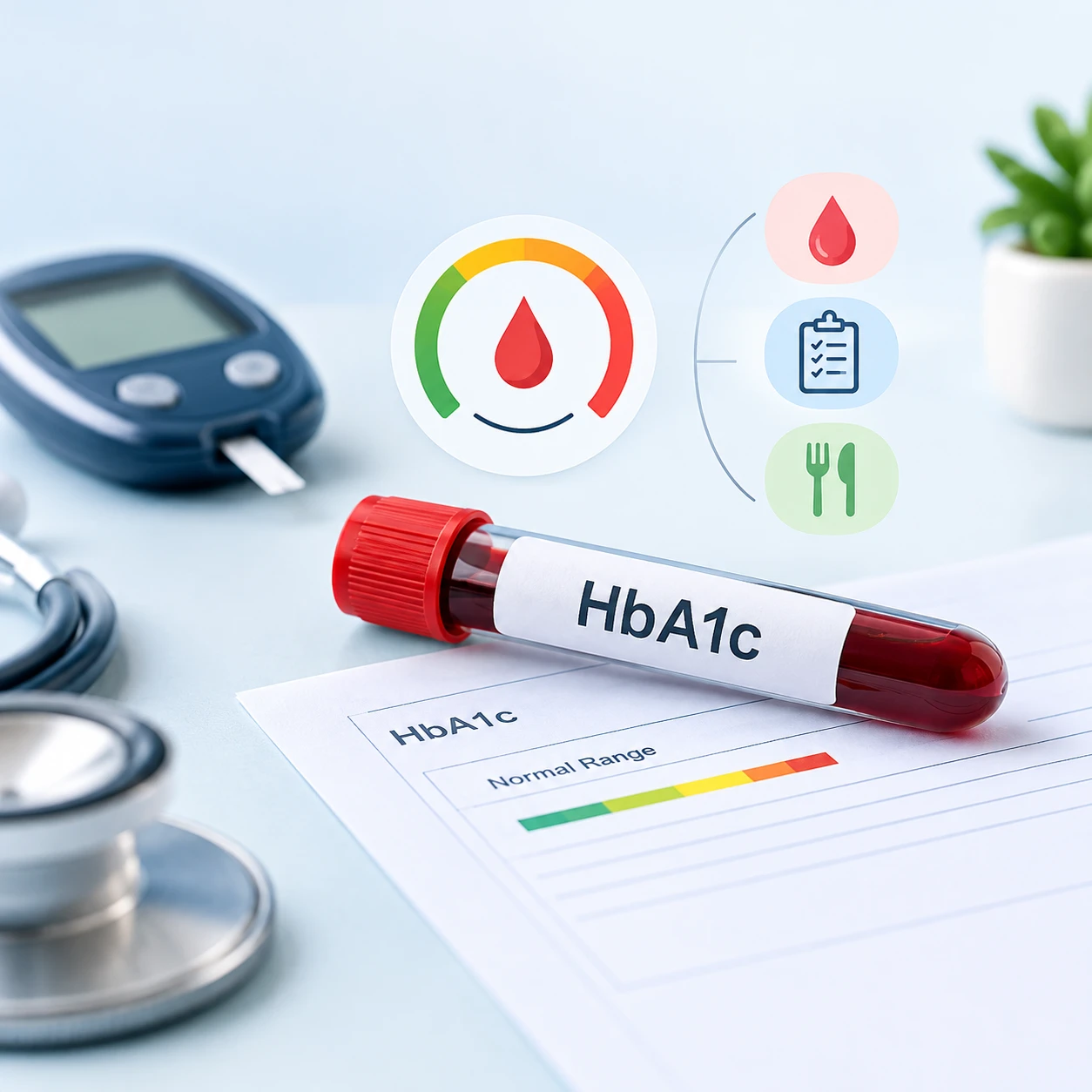
HbA1c, also called glycated haemoglobin or A1c, measures the percentage of haemoglobin in your red blood cells that has sugar (glucose) attached to it. Red blood cells live for roughly three months, so the result reflects your average blood sugar over the past 2 to 3 months, not just what you ate this morning.
That is why doctors use it both to screen for prediabetes and diabetes and to monitor how well treatment, diet and exercise are working in people who already have diabetes.
HbA1c normal range
These are the ranges most commonly used by doctors:
| HbA1c result | What it usually means |
|---|---|
| Below 5.7% | Normal |
| 5.7% to 6.4% | Prediabetes (higher than normal, below the diabetes range) |
| 6.5% or higher | Diabetes range (usually confirmed with a repeat test) |
For people already diagnosed with diabetes, many adults are advised to aim for an HbA1c below about 7%, but the right target depends on your age, other health conditions and medicines. Your doctor may set a different goal for you.
What does your HbA1c mean in daily blood sugar?
HbA1c can be translated into an estimated average glucose level, which many people find easier to relate to:
| HbA1c | Estimated average glucose |
|---|---|
| 5.7% | about 117 mg/dL |
| 6.0% | about 126 mg/dL |
| 6.5% | about 140 mg/dL |
| 7.0% | about 154 mg/dL |
| 8.0% | about 183 mg/dL |
Do you need to fast for an HbA1c test?
No. Because HbA1c reflects the past few months, fasting is not required for the HbA1c test itself. You can usually eat and drink normally and take your regular medicines. If the same blood draw also includes a fasting sugar or lipid profile, you will be told to fast for those tests, so confirm the preparation for the package you book.
Who should get an HbA1c test, and how often?
- Adults with risk factors such as being overweight, a family history of diabetes, high blood pressure, PCOS or a sedentary lifestyle. Doctors commonly suggest screening from around age 35, or earlier if you have these risk factors.
- People with prediabetes, usually once a year or as advised.
- People with diabetes, commonly every 3 to 6 months, depending on how stable your control is and whether your treatment has changed.
What can affect your HbA1c result?
The test is reliable for most people, but a few conditions can make the number higher or lower than your real average blood sugar. These include anaemia and iron deficiency, recent blood loss or a blood transfusion, certain inherited haemoglobin variants, advanced kidney disease and pregnancy. If you have any of these, tell your doctor so the result can be interpreted correctly.
HbA1c test price and how to book
You can book the HbA1c with Graph test on SecondMedic with free home sample collection. At the time of writing it starts at around Rs. 550, though prices can vary by city and change over time, so check the current price on the package page. If you would like a broader check of your sugar control, you can also look at diabetes screening panels such as Jaanch Diabetes Screening, or compare all health checkup packages.
A trained phlebotomist collects a blood sample at your home, the sample is processed at an NABL certified partner lab, and your report is shared digitally within 48 to 72 hours.
When should you talk to a doctor?
A single HbA1c result is a screening tool, not a diagnosis. If your result is in the prediabetes or diabetes range, or if you have symptoms such as excessive thirst, frequent urination, unexplained weight loss or blurred vision, speak to a doctor. You can consult a doctor online to review your report and plan the next steps. Many people also pair this test with a wider screen, such as a full body checkup.
This article is for general information and does not replace medical advice. Always follow your own doctor's guidance about testing and treatment.