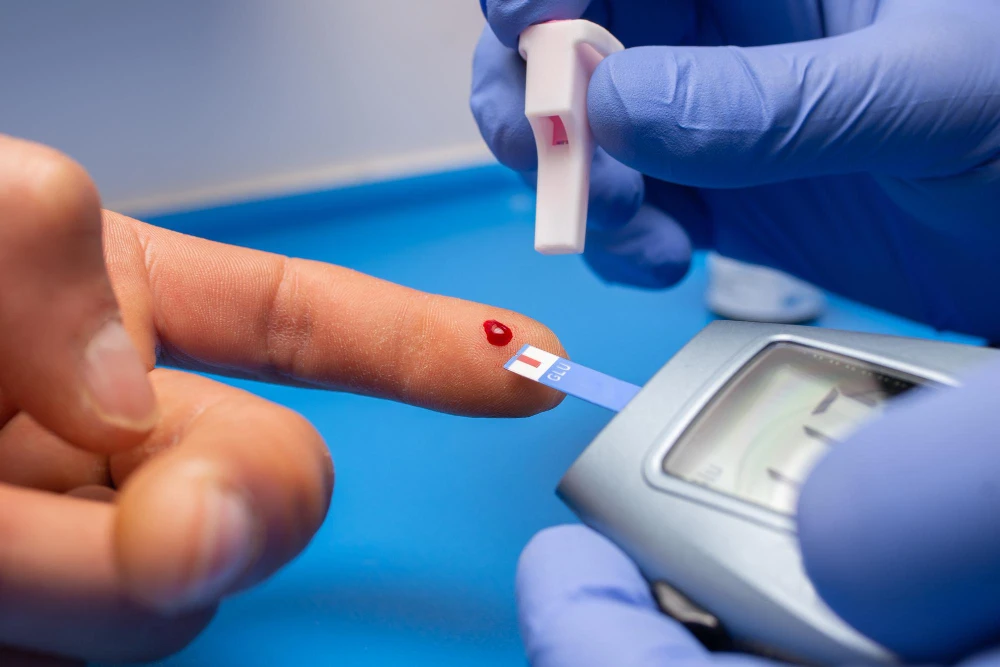
Feeling tired more often than usual? Have you been advised to get a blood test during a routine health checkup? A Complete Blood Count (CBC) is one of the most commonly requested blood tests because it provides important information about the cells circulating in your blood.
A CBC blood test can help doctors investigate symptoms such as fatigue, weakness, fever, and unusual bruising. It measures different blood components, including red blood cells, white blood cells, haemoglobin, and platelets. The results can help identify patterns that may require further medical evaluation.
If you are searching for a CBC blood test price, normal range, or information about what the test detects, this guide explains the essentials in simple language.
SecondMedic offers a Hemogram 6-Part Differential test listed at ₹330. You can review the available test details and booking options here: Book a CBC / Hemogram Test on SecondMedic.
What Is a CBC Blood Test?
CBC stands for Complete Blood Count. It is a blood test that measures the number and characteristics of several types of blood cells.
Your blood contains red blood cells, white blood cells, and platelets. Each performs a different function that helps your body work properly.
Red blood cells carry oxygen from your lungs to the rest of your body. White blood cells help your immune system respond to infections and other threats. Platelets help your blood clot when you have an injury.
A CBC measures these components and may include additional measurements, such as haemoglobin, haematocrit, and red blood cell indices.
A standard CBC and a six-part differential haemogram are related tests, but the exact parameters can vary. A six-part differential typically provides a breakdown of white blood cell types. Check the package description to confirm the parameters included in the SecondMedic listing.
What Does a CBC Blood Test Detect?
A CBC does not diagnose every condition on its own. However, it can reveal patterns that help a doctor decide whether further tests or investigations are needed.
1. Anaemia
Anaemia occurs when your body does not have enough healthy red blood cells or haemoglobin to carry oxygen effectively.
A CBC measures haemoglobin, red blood cell count, and related indices that can help identify a pattern consistent with anaemia.
Possible symptoms include tiredness, weakness, dizziness, and shortness of breath. Iron deficiency is one possible cause, but anaemia can also result from vitamin deficiencies, chronic diseases, blood loss, and other conditions.
Additional tests may be required to determine the cause.
2. Infections and Immune System Changes
White blood cells help protect your body against infections. A CBC measures the white blood cell count, while a differential provides information about different types of white blood cells.
An elevated or reduced white blood cell count can occur for several reasons, including infections, medication effects, inflammatory conditions, and certain blood disorders.
A CBC alone cannot confirm whether an infection is bacterial or viral. Your doctor will interpret the results alongside your symptoms and medical history.
3. Platelet Abnormalities
Platelets help your blood form clots. If your platelet count is too low or too high, your doctor may investigate the underlying cause.
Low platelet counts can sometimes be associated with easy bruising or bleeding. High platelet counts can occur in response to conditions such as inflammation or iron deficiency, although other causes are possible.
An abnormal platelet result does not automatically mean you have a serious disease. Further assessment may be needed.
4. General Health Assessment
Doctors often request a CBC as part of a routine health assessment or when investigating unexplained symptoms.
It can provide useful information about blood cell counts and help guide further investigations. However, a CBC is not a complete health checkup and does not measure every aspect of your health.
CBC Blood Test Normal Range
One of the most common questions people ask is: What is the normal range for a CBC blood test?
The answer depends on the particular blood component being measured, your age, sex, pregnancy status, laboratory methods, and other individual factors.
The following are illustrative reference ranges commonly used for adults. Your laboratory's own reference intervals should take priority.
| Test parameter | Illustrative adult reference range |
|---|---|
| Haemoglobin — men | Approximately 13.5–17.5 g/dL |
| Haemoglobin — women | Approximately 12.0–15.5 g/dL |
| White blood cell count | Approximately 4,000–11,000 cells/µL |
| Platelet count | Approximately 150,000–450,000 cells/µL |
| Red blood cell count — men | Approximately 4.5–5.9 million cells/µL |
| Red blood cell count — women | Approximately 4.1–5.1 million cells/µL |
These values are general examples, not universal diagnostic cut-offs. Ranges vary between laboratories, and different reference intervals may apply to children and pregnant individuals.
Your doctor may also examine haematocrit, mean corpuscular volume (MCV), mean corpuscular haemoglobin (MCH), and the white blood cell differential.
An abnormal result does not always indicate an illness, and a result within the reference range does not rule out every health problem. Always discuss results in the context of your symptoms and medical history.
CBC Blood Test Price in India
The price of a CBC test depends on the diagnostic provider, location, test parameters, and whether the test is purchased individually or as part of a larger health package.
The SecondMedic listing for the Hemogram 6-Part Differential test is priced at ₹330.
Before booking, check the current listing for:
- The final price and any applicable charges.
- The exact parameters included in the test.
- Home sample collection availability at your location.
- The expected report delivery timeline.
- Any preparation instructions.
You can view the package details here: Hemogram 6-Part Differential Test — ₹330 listing.
Prices and availability can change, so confirm the current details on the booking page before placing your order.
Does a CBC Blood Test Require Fasting?
In most cases, a CBC blood test alone does not require fasting.
You can generally eat and drink normally before an isolated CBC test unless your healthcare professional or laboratory provides different instructions.
However, if your doctor has ordered a CBC along with tests such as fasting blood glucose or a lipid profile that requires fasting, you may need to follow specific preparation instructions for the combined appointment.
Before your sample collection, confirm the requirements for all tests in your booking. Continue taking prescribed medicines as directed unless your doctor tells you otherwise.
Who Should Get a CBC Test?
A doctor may recommend a CBC test for several reasons.
People experiencing persistent fatigue or weakness: A CBC can help investigate whether anaemia or another blood cell abnormality may be contributing to symptoms.
People with unexplained fever: White blood cell counts may provide additional information when a doctor investigates a possible infection or inflammatory condition.
People experiencing unusual bruising or bleeding: Platelet measurements and other blood cell findings may help guide further evaluation.
People undergoing routine health assessments: A CBC may be included in a checkup when clinically appropriate.
People monitoring an existing medical condition: Doctors may use repeat CBC testing to monitor selected conditions or assess the effects of certain medications.
Not everyone needs a CBC at the same frequency. Your doctor can recommend testing based on your symptoms, age, medical history, and individual risk factors.
How to Prepare for Your CBC Test
Preparing for a CBC is generally straightforward.
- Confirm the test parameters included in your booking.
- Check whether any additional tests require fasting.
- Follow the sample collection instructions provided by the laboratory.
- Inform your healthcare professional about relevant medicines and medical conditions.
- Ask when and how your report will be available.
A blood sample is usually collected from a vein in your arm by a trained collection professional. The sample is then analysed by the laboratory.
The collection itself usually takes only a few minutes, although the overall appointment time can vary.
How to Understand Your CBC Report
When you receive your report, you may see values marked as high or low. It is natural to feel concerned, but an out-of-range result does not automatically mean you have a serious medical condition.
For example, a low haemoglobin result may prompt your doctor to investigate anaemia. A high white blood cell count may need to be considered alongside symptoms of infection or inflammation.
The next step depends on the complete pattern of results, your medical history, and the reason the test was ordered. Your doctor may recommend additional tests or repeat the CBC if necessary.
Avoid starting iron supplements, antibiotics, or other medicines based solely on your CBC report without appropriate medical guidance.
Conclusion: Book Your CBC Blood Test with SecondMedic
A CBC blood test is a useful diagnostic tool that helps doctors assess red blood cells, white blood cells, haemoglobin, and platelets. It can support the investigation of anaemia, infections, platelet abnormalities, and other health concerns when interpreted alongside your symptoms and medical history.
Understanding your results, knowing whether fasting is required, and checking the included test parameters can help you make a more informed decision about your healthcare.
If you have been advised to get a CBC or haemogram test, explore the SecondMedic Hemogram 6-Part Differential test, listed at ₹330. Review the current price and availability before booking.
Take a proactive step towards understanding your health with SecondMedic.
Medical disclaimer: This article is for general educational purposes only and is not a substitute for professional medical advice, diagnosis, or treatment. Consult a qualified healthcare professional to interpret your test results and determine whether further testing is needed.