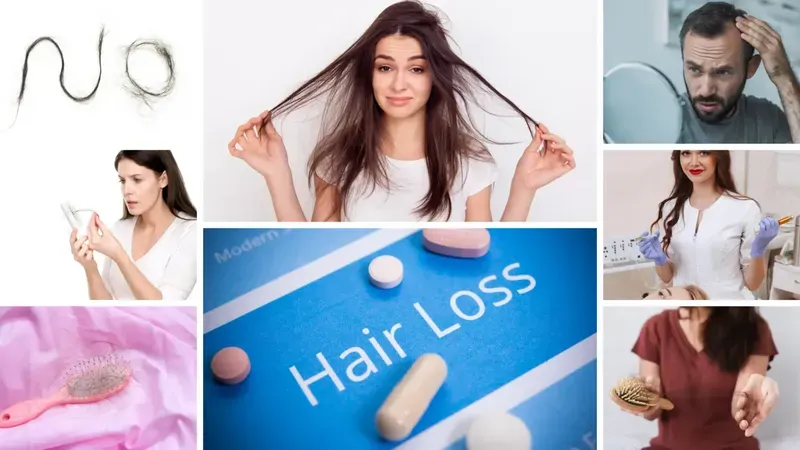
What is the main cause of hair loss?
Alopecia areata, a diagnosis of exclusion. Androgenetic alopecia is the most common form of hair loss among both males and females. Telogen effluvium, which is caused by significant stress or sudden weight-loss from dieting or other medical condition that affects the body's ability to metabolize protein, producing a large amount of a hormone called prolactin Follicular damage due to chemicals applied to the scalp Chronic seborrhea Eczema Vitiligo Hair grooming habits Hats Tight braids or ponytails Harsh washing agents Exposure to ultra-violet rays Intense sweating Drugs (cocaine) Depressive disorder Besides some rare genetic conditions, the most common causes of hair loss are drug-related, hormonal imbalances or issues, or nutritional deficiencies.
The most common cause is androgenic alopecia, also known as pattern baldness or male-pattern baldness, which affects about half of all men by the age of 45. It's caused by changes in hormones that affect hair follicles and it can be treated with hormone replacement therapy if diagnosed early enough. Other things may contribute to a person's inability to retain their natural locks including stress, poor diet, hormonal changes associated with pregnancy and childbirth, medications for other illnesses such as high blood pressure or epilepsy drugs or even gene mutation.
There are many reasons ar why people experience hair loss. Dermatologists can often identify the cause of your hair loss by taking a careful medical history. Sometimes, it's just that your body is not allowing for any hair to grow at the moment. There are other times when there may be an illness causing an increased rate of cell death or decreased production of new cells causing abrupt balding, also known as 'telogen effluvium'. And if you have been suffering from excessive scalp itching or dry skin at the same time as hair loss, it could be due to something called seborrhea dermatitis.
Tempred loss of hair due to extreme conditions is called telogen effluvium and occurs more commonly during times of illness or stress, childbirth, and after episodes of major weight loss.
It can also happen as a result of some medications like chemotherapy drugs. This type of hair loss generally stops on its own within six months to two years, once the triggering condition is done or resolved. Alopecia areata is another form that causes total hair loss ( inability to grow new hair) and often starts with one round patch and may spread over time. Alopecia universalis results in complete absence of hair on the head and usually permanent – but there are interventions for this too – talk to your doctor about it.
Hair loss can be caused by a number of different conditions. Below is a list of common causes. The following list is not exhaustive and other causes may also exist: Telogen effluvium -hair shedding that occurs when stem cells in the hair follicle become activated and generate new hairs, usually during times of physical stress or after childbirth, starting at around day 35 after birth, which ends up with about 100 hairs being shed from the scalp every day from the month before birth until two to four months postpartum. In these cases, duration can last 3-6 months for females and 1-3 months for males. Hair loss can be caused by a variety of factors such as stress, nutritional deficiencies, hormonal changes and excessive weight loss.
A more precise answer would be the cause is unknown to your question writer so we will avoid guessing. Hormonal changes and excessive weight loss may not appear for months or years but they are possible causes and should always be considered when you ask "What causes hair thinning" or "Why does my hair keep falling out". The following factors may contribute to hair loss: use of certain medication, high thyroid activity (hyperthyroidism), increased levels of androgens (male hormones such as testosterone), stress, nutritional deficiencies, irregular sleep patterns or schedules that disrupt normal hormone cycles.
There are many causes. Some hair loss is not due to anything wrong with the body, but just simply comes with age. The most common cause of excessive hair loss is that menopause changes hormone levels and affects the production of male hormones in women. Certain diseases like lupus can also be a cause for similar problems - including scalp itchiness/flaking, rapid growth or loss of hair in patches, unusual scaling or crust formation on the scalp, dry itchy or red skin, visual discoloration. Genetics plays an important part in balding.
Stress causes hair to slow down in the growth cycle. Stress typically causes hair follicles to drop out sooner or later, causing shorter and thinner strands of hair. Clients that have cancer as well as cancer treatments will often loose their hair as a side effect from those treatments. This is temporary and should grow back after treatment ends, however it can be difficult to keep up with this during life changes such as chemotherapy. While hormones are involved, male-pattern baldness has been shown not to be a hormonal condition but a precursor to other health issues affecting genetics and adulthood stress levels which disappear quickly for women going through menopause The main cause of hair loss, also called hypoandrogenism, is an underlying hormonal imbalance. This imbalance can be caused by elevated levels of male hormones or female hormones. With conditions like scabies and skin cancer that will increase the level of testosterone in the body, the second possibility may lead to hyperandrogenism (excessively higher levels), which could result in hair loss.
Anything that elevates either your male or female hormone levels should prompt a visit to your primary care physician for evaluation and balance testing - these include recreational medication (amphetamines/ephedrine); abuse/overuse; carb-heavy diets; thyroid disease; testicular torsion injury; estrogen replacement therapy; deficiency in zinc
The main cause of hair loss is androgenetic alopecia, also called male-pattern baldness. These words describe a family of genetic disorders characterized by progressive thinning and eventual dissolution of the hair follicle due to hormones. Thinning begins typically around the temples; over time, it spreads to form a characteristic horseshoe-shaped pattern before ending with total baldness in some men. It is flawed to split hair loss into two categories- male pattern baldness and female pattern baldness. One type of hair loss is not any different from the other, but doctors are now learning that all types are caused by an autoimmune disease that targets your hair follicles for destruction.
There are many causes for hair loss including physical trauma, stress, hormonal imbalance, autoimmune disorders, treatments for medical conditions including cancer, medications that are given either orally or topically. Some of the most common causes are male pattern baldness (which affects both males and females), alopecia areata (a chronic autoimmune disorder that can lead to patches of baldness on the head), and telogen effluvium which is due to hair falling out in response to severe stress. Severely inadequate nutrition resulting in hair falling out because there's not enough nutrients in your diet may also be a factor.
There are a number of different causes and treatments for hair loss, but the key is to find out what the underlying cause is. Primary causes include stress, disease, trichotillomania (compulsive hair pulling), hormonal changes from pregnancy or birth control medication, some medications such as antidepressants and blood pressure medicine as well as some autoimmune diseases.
Possible prevention measures include reducing stress levels through exercise or meditation; getting more sleep; using appropriate shampoos made specifically for thinning hair; limiting heat styling on your locks which can severely dehydrate your strands. Treatments may also involve different types of supplements such as diets that contain a significant level of omega 3 fatty acids--known for their benefits in strengthening cells throughout the body.
There is no clear understanding of the factors that cause baldness. There are, however, three main areas where research has focused on to try and lessen hair typesetting. Contrary to popular belief I do not believe there is evidence for any connection between male pattern baldness (MPB) and a lack of appropriate scalp circulation or a consequence in a blocked sebaceous gland. It isn't unheard of for healthy men under 55 with MPB to have good blood flow in the scalp and normal sebaceous glands. Diet based suggestions should probably be offered before going down this route... The three topics examined in the scientific literature are: Male hormones including testosterone, levels of female hormones such as oestrogen or follicle
Preventing hair loss can be achieved by eating healthful foods, drinking plenty of water, following a proper exercise programs, and getting regular haircuts. The best treatments for baldness are minoxidil, finasteride or laser therapy. Minoxidil is the least expensive treatment but may only produce moderate results. Finasteride is more effective but carries risks in terms of potential to create psychiatric problems in patients due to its action on DHT production in the body. Laser therapy poses no side effects because it only selectively destroys hair follicles that have been overactive due to increased levels of testosterone being converted into DHT in companies with excess 5-AR activity. One possible way to treat hair loss without chemicals would.
The prevention and treatment of hair loss is essentially the reversal of this process. Hair loss, or baldness as it is more commonly known as, can be caused by a number of reasons such as hormonal imbalance, stress and genes. Methods to combat hair loss include increased levels of Vitamin D intake (which helps prevent hair loss) and stopping any habit that might contribute to the problem such as the use of some fake tanning products if applicable. no smoking, medications or medications for mental health problems should not be used...
There are quite a few things you can do to encourage healthy hair growth, including moisturizing your scalp, wearing your hair loose instead of in tight styles like braids or ponytails (and don't go overboard with the brushing), and using gentle shampoo formulas.
Prevention
In many cases, people have a genetic or family-related tendency to experience hair loss. One way to prevent this from being an issue is not to develop that tendency in the first place! If you already do, then tracking blood-sugar levels and taking care of your scalp diligently are important parts of managing your "problem." It's also always worth it to experiment with supplements like biotin (a B vitamin) and saw palmetto (an herb traditionally used for prostate problems). Proteins like collagen can be helpful in reducing hair breakage when additional protein intake is required; try adding more high-protein meals if you're interested. The prevention and treatment of hair loss includes a number of options, such as stopping any factor that could be contributing to the hair loss (such as inflammation, bioidentical hormone therapy) and using treatments like Propecia.
Caffeine can also trigger hair loss because it is a vasoconstrictor, which means it shrinks your arteries and limits blood flow to your follicles. If these instructions are followed the individual may grow new hairs in as little as five weeks.
If those instructions aren't followed, then it's possible for those who go without treatment to experience bald patches on their scalp within eight months. Potential treatments include either topical dry shampoos or regular washing with specific shampooing products.
Some of the contributing factors to hair loss include menopause, hormonal changes, medications, genetics and autoimmune disorders. There are also a couple different treatment options available that work differently for each person, depending on what they're experiencing. Transplantation is one option both surgeons and patients discuss as an attempt to cure hair loss because it removes the stress on the hair follicles that causes them to produce little or no new hairs. FUE (follicular unit extraction) transplants use individual grafts which are transplanted onto balding areas inflicting minimal impact on existing hair growth rates. Laser light therapy uses concentrated light rays which target microscopic hairs known to be in the telogen phase (resting) or early stages
Treatment should be to stop the person from losing hair any more than they already are, and also to prevent regrowing any lost hair. Treatments may include pharmaceuticals such as Minoxidil, medications such as Propecia or Minocycline, certain vitamins/minerals such as Iron or Vitamin B12 to stimulate fertilizer production and scalp health or hair solution. The role of DHT in male pattern baldness and androgenic alopecia is well understood: The enzyme 5-alpha reductase produces effects that involve dihydrotestosterone (DHT), which has been suggested to affect both men's beard growth and male pattern baldness by conversion of testosterone into a related hormone.