







BMR: the short answer
Your basal metabolic rate (BMR) is the number of calories your body burns at complete rest, just to keep you alive. For most Indian adults it is about 1,100 to 1,800 calories a day. It makes up 60 to 70% of the calories you burn, and the rest comes from moving about, exercise and digesting food.
How BMR is calculated
This calculator uses the Mifflin-St Jeor equation, which a review of the common formulas found to be the most accurate for healthy adults:
Men: BMR = 10 × weight (kg) + 6.25 × height (cm) − 5 × age (years) + 5
Women: BMR = 10 × weight (kg) + 6.25 × height (cm) − 5 × age (years) − 161
For example, a 35-year-old woman who is 158 cm tall and weighs 65 kg has a BMR of 650 + 987.5 − 175 − 161 = about 1,300 calories a day.
BMR by weight
BMR values for a 30-year-old woman of 155 cm and a 30-year-old man of 168 cm, close to the average heights of Indian adults.
| Weight | Woman, 155 cm | Man, 168 cm |
|---|---|---|
| 50 kg | 1,158 kcal | 1,405 kcal |
| 60 kg | 1,258 kcal | 1,505 kcal |
| 70 kg | 1,358 kcal | 1,605 kcal |
| 80 kg | 1,458 kcal | 1,705 kcal |
| 90 kg | 1,558 kcal | 1,805 kcal |
Each 10 years of age lowers BMR by about 50 calories a day on this formula.
From BMR to the calories you burn in a day
To find your total daily calories, multiply your BMR by an activity factor. This table shows the result for a 60 kg woman and a 70 kg man from the table above.
| Activity level | Factor | Woman, 60 kg | Man, 70 kg |
|---|---|---|---|
| Sedentary Desk job, little or no exercise | × 1.2 | 1,510 kcal | 1,930 kcal |
| Lightly active Light exercise 1–3 days a week | × 1.375 | 1,730 kcal | 2,210 kcal |
| Moderately active Exercise 3–5 days a week | × 1.55 | 1,950 kcal | 2,490 kcal |
| Very active Hard exercise 6–7 days a week | × 1.725 | 2,170 kcal | 2,770 kcal |
| Extra active Physical job plus hard training | × 1.9 | 2,390 kcal | 3,050 kcal |
To see how many calories to eat to lose or gain weight, use the calorie calculator.
What raises or lowers your BMR
- Body size and muscle: a bigger body and more muscle burn more calories, even at rest.
- Age: BMR falls slowly with age, mostly because people lose muscle.
- Sex: men usually have a higher BMR than women of the same weight because they carry more muscle.
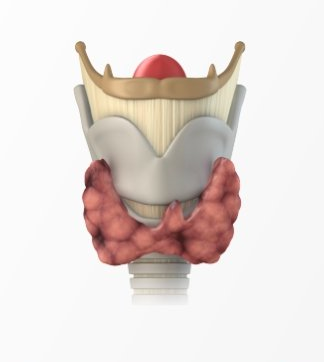
- Thyroid hormones: an underactive thyroid slows your metabolism and an overactive one speeds it up. A thyroid test (TSH, T3, T4) checks this.
- Crash diets: eating far too little makes you lose muscle, and your BMR drops with it.
How to keep your metabolism healthy
- Do strength exercise two or three times a week, such as squats, push-ups or weights, to build and keep muscle.
- Eat enough protein from dal, pulses, milk, curd, paneer, eggs, fish or chicken at each meal.
- Lose weight slowly, 0.5 to 1 kg a week, rather than with very low-calorie diets.
- Sleep 7 to 8 hours. Poor sleep affects the hormones that control hunger and energy use.
References
- Mifflin MD, St Jeor ST, Hill LA, et al. A new predictive equation for resting energy expenditure in healthy individuals. Am J Clin Nutr. 1990;51:241-7.
- Frankenfield D, Roth-Yousey L, Compher C. Comparison of predictive equations for resting metabolic rate in healthy nonobese and obese adults: a systematic review. J Am Diet Assoc. 2005;105:775-89.
- FAO/WHO/UNU. Human energy requirements: report of a joint expert consultation. Rome, 2004.
Medical disclaimer: this calculator gives an estimate for general information only. It is not a diagnosis and does not replace advice from a doctor who knows your history. Read our editorial policy.





