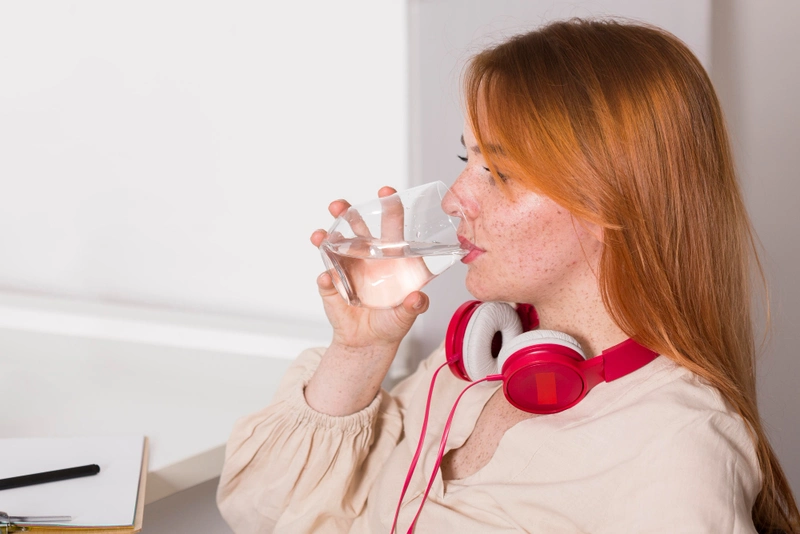
Yes, you can drink plain water before a blood test, even a fasting one. A glass or two (about 250–500 ml) in the hour before the test keeps more fluid in your veins and makes the blood draw easier. If you have been asked to fast, avoid tea, coffee, juice, milk and flavoured water until the sample is taken.
Why Drinking Water Before a Blood Test Is Important
Your blood is made up of plasma (a fluid) and different types of blood cells. When you are dehydrated, the fluid part of blood reduces, making your blood thicker. Thickened blood is harder to draw and may affect certain test values. On the other hand, drinking water keeps your veins full and easier to access with a needle.
A hydrated body also gives a better quality blood sample, which leads to more accurate results. Lab technicians prefer drawing blood from people who are well-hydrated, as it saves time and reduces discomfort for the patient.
How Much Water Should You Drink?
There is no fixed official amount, but for most routine blood tests—including fasting tests—1–2 full glasses of water (about 250–500 ml) before your appointment is usually enough. Ideally, drink the water 30–60 minutes before the test. For some tests, your doctor or lab may ask you to drink extra water, so follow their instructions.
If your test is in the early morning, simply drink a glass of water after waking up. You can drink another small glass on the way to the lab if required.
Can You Drink Water During Fasting?
Yes. Fasting before a blood test usually means not eating or drinking anything except plain water for several hours. Plain water does not have calories or sugars and does not affect blood glucose or cholesterol test results. Therefore, it is safe to drink water unless your doctor specifically advises otherwise. Avoid lemon-flavoured or flavoured sparkling water, as these may contain sugar or sweeteners.
What You Should Avoid Before a Blood Test
If your test needs fasting, avoid these drinks until your sample has been taken:
- Fruit juice
- Coffee and tea
- Milk or milk-based drinks
- Soft drinks or energy drinks
- Alcohol
These drinks contain sugars, caffeine, fats, or alcohol, which can alter blood test results.
Tips for Preparing for a Blood Test
- If fasting is needed, follow the fasting time your doctor or lab gives you (usually 8–12 hours).
- Drink 1–2 glasses of plain water before the test.
- Avoid smoking, chewing gum or exercising while you are fasting before the test.
- Keep taking your regular medicines unless your doctor tells you to stop, and tell them about any vitamins or supplements you take.
- Wear comfortable clothing that allows easy access to your arm.
- Let the nurse know if you feel anxious or have a history of fainting.
Who Should Be Extra Careful About Water Intake?
People with heart failure, kidney disease, or fluid-restricted diets should consult their doctor regarding how much water they can drink before a blood test. In such cases, the doctor will give personalised advice on water intake.
What About Specialised Tests?
Most common blood tests (CBC, lipid profile, fasting glucose, LFT, KFT, thyroid, vitamin D/B12) allow water. Some of them need fasting, such as fasting blood glucose and often a lipid profile (cholesterol test), while others, like the HbA1c test, need no fasting at all. A few tests come with their own instructions, such as stopping certain medicines for a short time, so always check the lab instruction sheet or your doctor’s advice before your test. If you book lab tests in your city, read the preparation instructions for each test before your visit.
Takeaway Tips to Remember
- Water helps: Drinking water improves blood flow and sample quality.
- Usual amount: 250–500 ml of water (1–2 glasses) is usually enough.
- Avoid calories: Drink only plain water during fasting.
- Ask your doctor: Follow specific instructions if provided for specialised tests.
Conclusion
Proper preparation improves the quality of blood test results and makes the experience more comfortable for both you and the healthcare professional. One of the simplest yet most effective steps is to stay hydrated before the test. If you are wondering how much water to drink before blood test, the answer is simple—1 to 2 glasses of plain water 30 to 60 minutes before your appointment is safe and helpful for most people. Staying hydrated ensures better results, smoother blood collection and a more comfortable experience overall.
References
- Fasting for a Blood Test – MedlinePlus (U.S. National Library of Medicine)
- How to Prepare for a Lab Test – MedlinePlus (U.S. National Library of Medicine)
- Cholesterol Levels – MedlinePlus (U.S. National Library of Medicine)
- The A1C Test & Diabetes – NIDDK (U.S. National Institutes of Health)
- Blood tests – NHS