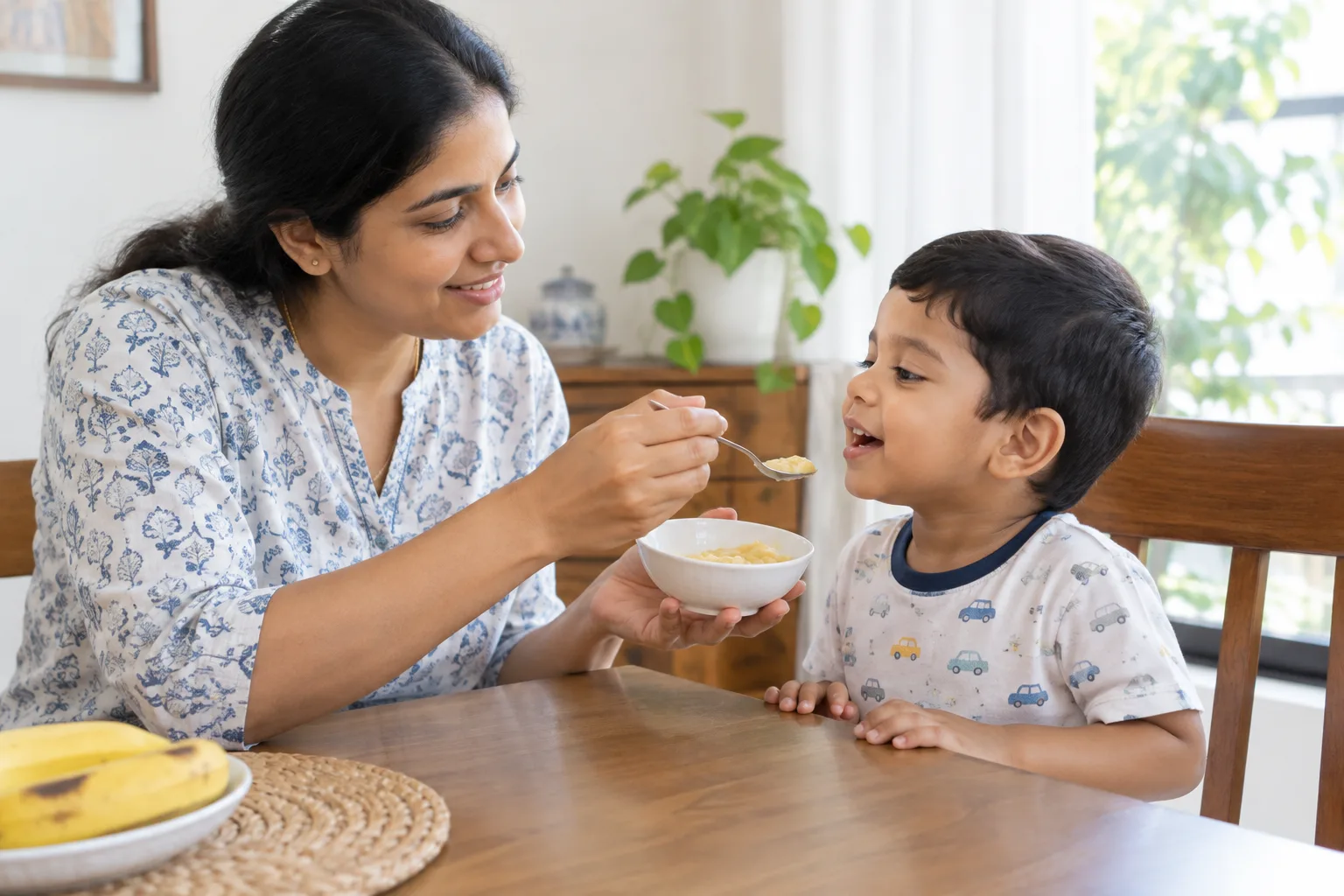
When a child develops a cough, parents often hear conflicting advice about food. Some families avoid bananas because they believe the fruit increases mucus or makes a cold worse. Others offer it because it is soft and easy to eat. For most children who already eat solid foods, banana is a reasonable food during a cough, provided they tolerate it and can swallow comfortably.
The important questions are not whether banana is a “cold” food, but whether your child is breathing comfortably, drinking enough and eating safely. Here are answers to common parent concerns.
Can a child eat banana when they have a cough?
Most children can eat banana during cough if they have eaten it before without problems. There is no good evidence that bananas make a routine viral cough last longer or cause the body to produce more mucus. A ripe banana can be a convenient source of energy when a child has less appetite.
However, banana does not treat the infection or other condition causing the cough. If your child coughs repeatedly while eating, seems to struggle with swallowing or becomes breathless, pause the meal and seek medical advice rather than trying a different food.
Does banana increase mucus or chest congestion?
A banana's soft, sticky texture may leave a temporary coating in the mouth. That feeling is not the same as increased mucus production in the nose, throat or lungs. A cough that follows eating also does not automatically mean that the food created mucus.
Children may cough because of a viral infection, nasal secretions draining into the throat, asthma or another cause. The timing can be coincidental. If the pattern happens repeatedly with meals, a doctor should assess it rather than assuming banana is responsible.
What about the idea that banana is a “cold” food?
Food traditions are important in many Indian households, but classifying a fruit as “cold” does not establish that it worsens respiratory infections. You can respect family preferences while choosing foods based on your child's comfort, age and usual tolerance.
Is banana safe when a child also has fever?
A child who wants banana during fever can usually eat it as part of their usual age-appropriate diet. There is no need to exclude it solely because their temperature is raised. Offer small amounts without pressure, and let appetite guide how much solid food they eat.
Fluids matter more than finishing a meal. Continue breastfeeding or usual formula feeds for babies, and offer suitable fluids to older children. Banana supplies some fluid but cannot replace drinks or milk feeds. Watch for reduced urination, a dry mouth, fewer tears or unusual sleepiness, which may signal dehydration.
How should you serve banana safely?
Use a texture your child already manages confidently. Babies generally begin complementary foods at around six months when developmentally ready; younger babies should not be given banana to soothe a cough. If feeding skills or swallowing are a concern, ask your paediatrician for individual advice.
- Choose ripe fruit: It should be soft enough to mash easily, without hard or unripe sections.
- Adapt the texture: Offer mashed banana or soft pieces prepared for your child's developmental stage. Avoid large, sticky mouthfuls or thick round slices.
- Keep your child upright: Have them sit securely during meals, with an adult watching closely.
- Wait for a calm moment: Do not feed during a coughing fit, while your child is crying hard or when they are struggling to breathe.
- Follow appetite cues: Offer a small portion and do not force-feed. A few comfortable bites are better than a stressful meal.
Should it be warm or at room temperature?
Room-temperature banana is a practical option if your child dislikes chilled food. Cold foods do not cause viral infections, and there is no universal rule that refrigerated fruit worsens cough. Choose the temperature your child finds comfortable; avoid serving anything hot enough to burn.
Could reflux or an allergy explain coughing after banana?
Reflux can sometimes contribute to coughing, although cough alone does not establish the diagnosis. Parents considering banana for acid reflux should know that it is not a proven treatment, and tolerance varies between children. Repeated coughing with feeds, discomfort, frequent vomiting or poor weight gain needs assessment.
Do not change an infant's sleep position to manage suspected reflux. Babies should sleep on their backs on a firm, flat sleep surface. A clinician can advise on feeding concerns and investigate whether reflux, a swallowing difficulty or another condition is involved.
Banana allergy is possible. Symptoms may include itching in the mouth, hives, swelling, vomiting or wheezing after eating. Breathing difficulty or swelling of the lips, tongue or throat requires emergency care. Do not offer banana again to test a suspected reaction; arrange a medical assessment.
What else can help a child feel comfortable?
Keep meals simple and familiar. Depending on age and usual diet, soft khichdi, dal, porridge or other easy-to-swallow foods may be comfortable choices. There is no single food that cures a cough, and a varied diet can resume as appetite improves.
- Offer frequent opportunities to drink, while continuing usual milk feeds for babies.
- Allow rest and keep the home free from tobacco smoke, incense smoke and strong fragrances that may irritate the airways.
- Avoid hot steam inhalation, which can cause burns, especially in young children.
- Ask a doctor about diagnosis and treatment rather than relying on food restrictions or cough remedies.
If you are unsure about feeding, reflux symptoms or a recurring cough, you can consult a doctor online for guidance. Online advice should not delay urgent in-person care when breathing or swallowing is affected.
When to see a doctor
Seek emergency care for difficult or very fast breathing, blue or grey lips, pauses in breathing, inability to swallow, severe drowsiness or suspected choking. Sudden coughing after food or a small object enters the mouth also needs urgent assessment.
Arrange prompt medical care for dehydration, worsening symptoms, persistent fever, repeated coughing during meals or poor feeding. A baby younger than three months with a temperature of 38°C or higher needs urgent medical assessment. See a doctor if a cough lasts more than three weeks, keeps returning or is accompanied by wheezing or poor growth.