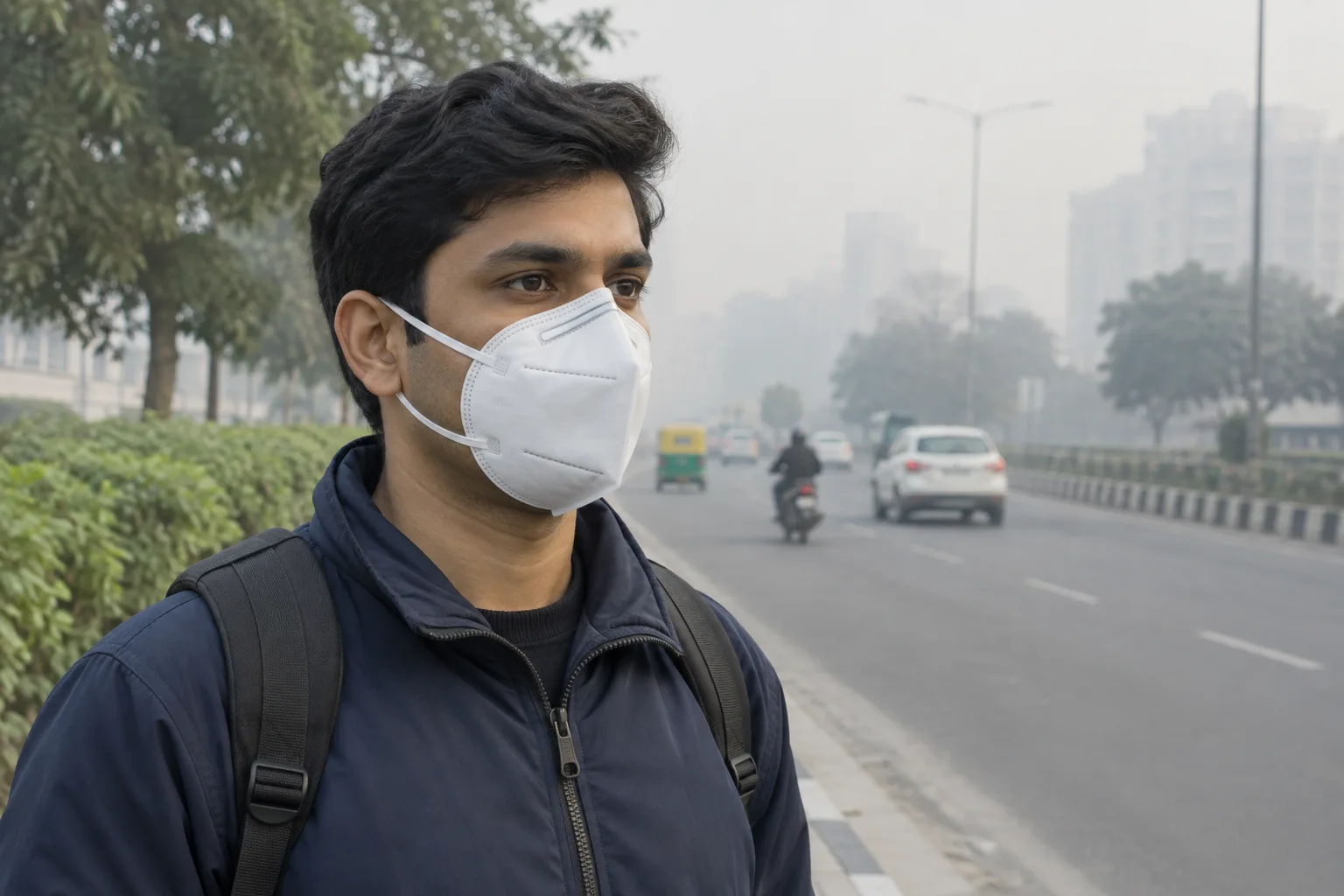
A scratchy throat or nagging cough after a smoggy commute can be unsettling. Polluted air can irritate the airways, but a cough alone cannot confirm the cause. Viral infections, asthma, allergies and other conditions can cause similar symptoms. Understanding the pattern—and knowing the warning signs—can help you decide when to seek care.
Why does polluted air make you cough?
Air pollution contains a mixture of particles and gases. Fine particulate matter from traffic, construction, burning waste and other sources can travel deep into the lungs. Irritant gases can also inflame the lining of the nose, throat and breathing tubes.
Coughing is one way your body tries to clear irritants and mucus. The connection between air pollution and respiratory health is particularly important for people whose airways are already sensitive, including those with asthma or chronic obstructive pulmonary disease (COPD).
You might notice a dry cough, throat irritation, extra mucus, wheezing or chest tightness. Symptoms may worsen outdoors, near busy roads or during periods of poor air quality. However, these patterns are clues rather than proof of the cause.
How long does a pollution-related cough last?
A mild air pollution cough may begin to settle within a few days once exposure is substantially reduced. Recovery varies, and there is no single reliable timeline. Continued exposure, an underlying breathing condition or a recent infection can keep the airways irritated for longer.
After a brief exposure
If symptoms follow a short period near smoke or heavy traffic, irritation may ease over hours to days after you move to cleaner air. Improvement should be gradual. A cough that worsens, disrupts sleep or comes with breathlessness needs medical assessment rather than simply more waiting.
During repeated exposure or an existing illness
Daily exposure can repeatedly trigger symptoms, making the cough seem constant. Someone recovering from a respiratory infection may also have sensitive airways for several weeks, with pollution aggravating the cough. A doctor can check whether asthma, infection, nasal allergies or another problem is contributing.
Arrange a medical review if a cough lasts more than two weeks, even if you suspect pollution. Seek help sooner if symptoms are worsening or you have a long-term lung or heart condition. In India, a persistent cough also warrants consideration of tuberculosis, especially with fever, night sweats, weight loss or a known exposure.
Could the cough have another cause?
The relationship between air pollution and lung health does not mean every cough on a polluted day is caused by smog. More than one trigger can be present at the same time.
- Respiratory infections: A runny nose, sore throat, fever or contact with someone unwell may suggest an infection.
- Asthma: Repeated wheezing, chest tightness, night-time cough or symptoms with exercise need assessment.
- Nasal allergies: Sneezing, an itchy nose and mucus dripping down the throat may contribute to coughing.
- Acid reflux: Cough after meals or when lying down, sometimes with heartburn, can point towards reflux.
- Other conditions: Persistent cough can have less obvious causes that require examination and, sometimes, tests.
A doctor considers air pollution and respiratory diseases alongside your symptoms, examination and medical history. Depending on the findings, they may recommend breathing tests, a chest X-ray or tests for infection; not everyone needs every test.
Practical ways to reduce irritation
Adjust outdoor activities to air quality
Check a reliable local Air Quality Index (AQI) before outdoor exercise or a long commute. When pollution is high, reduce strenuous outdoor activity and choose a cleaner indoor setting where possible. There is no universally safe time of day: local pollution levels change with traffic, weather and nearby burning.
If you must go out, a well-fitting N95 or equivalent particulate respirator can reduce inhalation of fine particles. It does not filter all harmful gases, and loose cloth or surgical masks offer less reliable protection against fine pollution particles. Anyone who finds a respirator difficult to tolerate should discuss suitable options with a clinician.
Make indoor air cleaner
- Avoid tobacco smoke, incense, mosquito coils and other unnecessary indoor smoke.
- Use kitchen exhaust ventilation while cooking, especially when fumes build up.
- Use damp dusting or mopping rather than sweeping that sends dust into the air.
- If available, use a correctly sized HEPA air purifier and maintain its filters as directed.
- Limit open windows when outdoor pollution is high, but ventilate when outside air improves and avoid trapping indoor pollutants.
Soothe your throat without overlooking the cause
Drink fluids regularly; warm drinks may feel soothing. Rest and avoid smoke or strong fragrances that trigger coughing. Very hot steam can cause burns and is not a proven way to clear pollution from the lungs. Be cautious about products claiming to detoxify the lungs.
Do not assume that antibiotics, cough syrups or inhalers are appropriate for every cough. A doctor should diagnose the cause and advise treatment. If you already have an asthma or COPD action plan, follow the plan agreed with your clinician and seek review if symptoms are not controlled.
Who should seek advice earlier?
Children, older adults, pregnant people and those with heart or lung disease may be more vulnerable to polluted air. Outdoor workers may also have prolonged exposure that is difficult to avoid. People concerned about air pollution respiratory conditions should describe their work environment, daily exposure and any existing diagnoses during a consultation.
Keep a brief record of when the cough started, whether it is dry or brings up mucus, and what makes it better or worse. For non-emergency symptoms, you can consult a doctor online to discuss next steps. An in-person examination may still be necessary.
When to see a doctor
Seek emergency care for severe breathlessness, blue or grey lips, confusion, fainting, severe chest pain or coughing up more than a small streak of blood. Do not wait for an online appointment.
Get prompt medical advice for any blood in sputum, fever with breathing difficulty, new or worsening wheezing, or a child who is breathing fast or struggling to feed. Arrange a review if your cough persists beyond two weeks, repeatedly returns or disrupts sleep and daily activities.